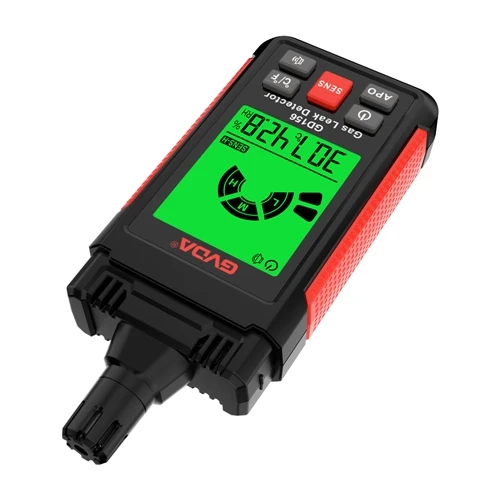
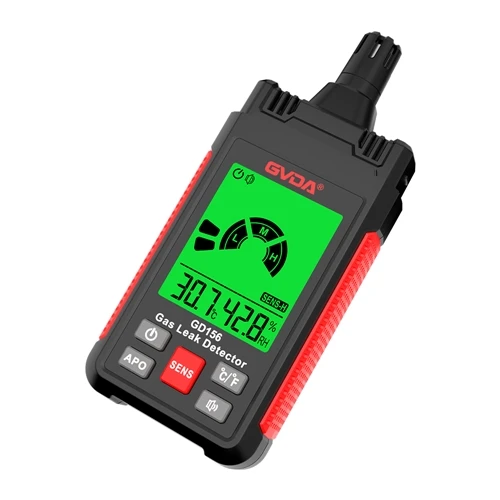
Classification of Gas Detectors by Detected Objects
Explosive environments and environments where explosion-proof electrical equipment contains explosive mixtures are called explosive environments. Electrical equipment designed and manufactured according to specified conditions without causing explosive mixtures to explode in the surrounding area shall become explosion-proof electrical equipment for explosive environments.
The country has clear regulations on various explosion-proof types of explosion-proof electrical equipment used in explosive environments. In dIICT6, d indicates that the explosion-proof type is explosion-proof, II indicates electrical equipment used in factories, C indicates the strictness level of explosive gas mixtures with large test gaps or small ignition current ratios (A, B, C levels), and T6 indicates the strictness level (85 ℃) that allows for high surface temperatures
Bus and branch lines refer to the connection method between the controller and the detector. If each detector requires a wire to communicate with the controller, this connection method is called a branch line connection. If several detectors can share a single wire to communicate with the controller, this connection method is called bus connection.
In a bus system, binary is used for encoding devices on the bus, with 8 being the high-order and 1 being the low order. When turned to the ON side, it is 0, and when turned to the OFF side, it is 1. The encoding formula is as follows: Code number=1 × N12 × N2 4 × N3 8 × N4 16 × N5
Sensor preheating: After the sensor is powered on, the output value is unstable. The period of waiting for the output value to stabilize becomes sensor preheating.
Sensor poisoning: When the sensor is powered on, if it comes into contact with gas with a concentration far beyond its range, it may cause the output value of the sensor to remain at a high level. Some poisoned sensors can be restored after a period of time, while others cannot be restored.
II Common properties related to combustible gases Gas names Molecular formula Specific gravity (air=1) TLV-TWA (PPM) TLV-STEL (PPM) TLV-IDLH (PPM) LEL (V%) HEL (V%) Hydrogen H2 0.0695 4 75 NH3 0.58 25 35 50015 28 Carbon monoxide C0 0.976 25 1500 12.5 74 Hydrogen sulfide H2S 1.115 4.3 45 Chlorine CL2 0.5 130 Methane CH4 0.554 5 15 Ethane C2H6 1.035 3 12.5 Ethylene C2H5 0.975 2.7 36 Propane C3H81.56 2 9.5 Propene C3H6 1.49 2.4 10.3 Butane C3H6 2.01 800 1.9 8.5 Butene-1 C4H81.937 1.6 10 Butene-2 C4H8 1.94 1.8 9.7 Butadiene C4H6 6 1.87 2 20000 2 12 isobutane (CH3) 3CH 2.068 1.8 8.4
III Explosion limit of combustible gas and air mixture
The explosion limit of combustible gases and air mixtures is related to the following factors: the type and chemical properties of the combustible gas; Purity of combustible gases; Uniformity of combustible gas and air mixture; The form, energy, and ignition location of the ignition source; The geometric shape and size of explosive containers; The temperature, pressure, and humidity of a mixture of combustible gases and air.