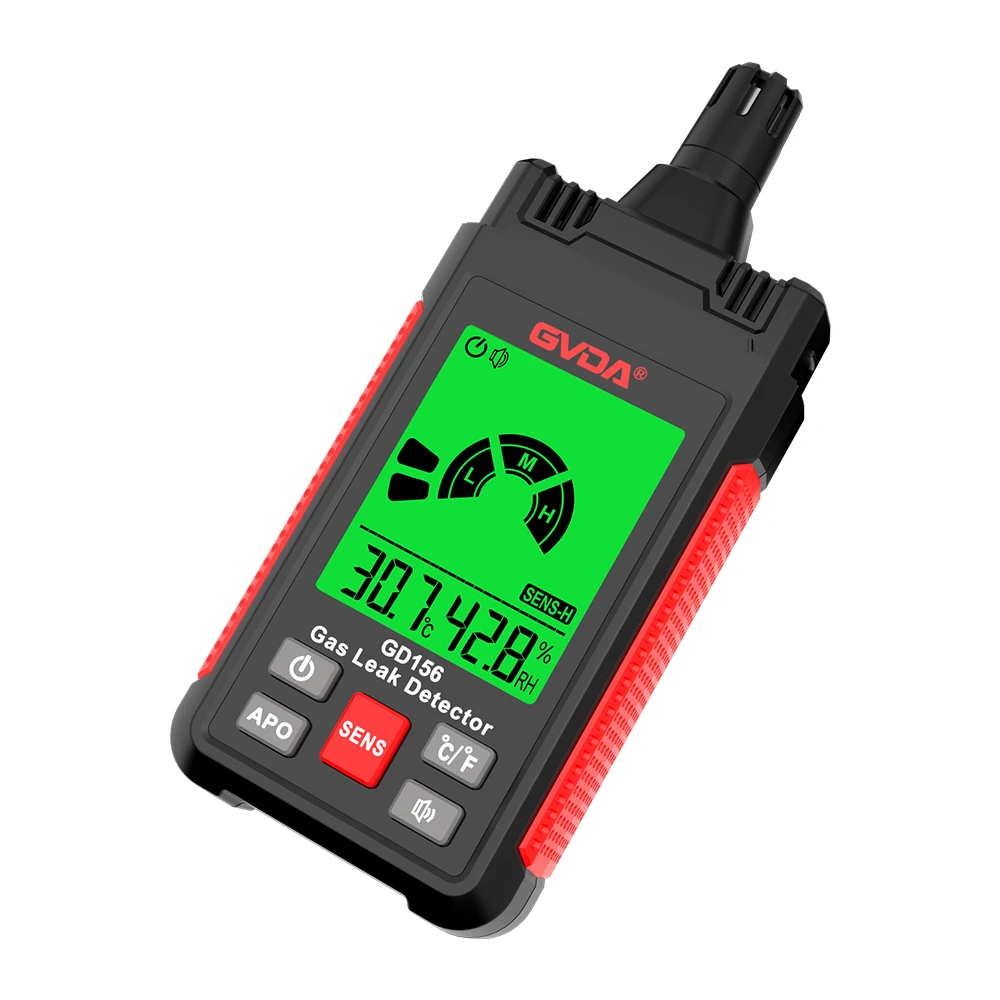
Combustible gas detector use and maintenance
1. Analysis of faults from the principle of flammable gas detectors
1. Combustible gas detectors are detectors installed and used in industrial and civil buildings that respond to single or multiple combustible gas concentrations. There are two types of flammable gas detectors that are used most frequently in daily life: catalytic flammable gas detectors and semiconductor flammable gas detectors. Restaurants, guesthouses, home workshops and other places that use gas, natural gas, and liquefied petroleum gas mainly use semiconductor-type flammable gas detectors, and industrial places that emit flammable gases and flammable vapors mainly use catalytic-type flammable gas detectors.
2. The catalytic combustible gas detector uses the resistance change of the refractory metal platinum wire to measure the combustible gas concentration. When the combustible gas enters the detector, it will cause an oxidation reaction (flameless combustion) on the surface of the platinum wire, and the heat generated will increase the temperature of the platinum wire, and the resistivity of the platinum wire will change. When the temperature of the platinum wire changes, the resistivity of the platinum wire changes, and the detected data also changes.
3. The semiconductor-type combustible gas detector uses the change of semiconductor surface resistance to measure the concentration of combustible gas. The semiconductor combustible gas detector uses a gas-sensitive semiconductor element with high sensitivity. When it encounters combustible gas in the working state, the resistance of the semiconductor will drop, and the drop value has a corresponding relationship with the concentration of combustible gas.
4. The combustible gas detector consists of two parts: detection and detection, and has detection and detection functions. The principle of the detection part of the flammable gas detector is that the sensor of the instrument uses a detection element, a fixed resistor and a zero potentiometer to form a detection bridge. The bridge uses platinum wire as the carrier catalytic element. After electrification, the temperature of the platinum wire rises to the working temperature, and the air reaches the surface of the element by natural diffusion or other methods. When there is no flammable gas in the air, the output of the bridge is zero. When the air contains flammable gas and diffuses to the detection element, flameless combustion occurs due to catalytic action, which makes the temperature of the detection element rise and the resistance of the platinum wire increases. , so that the bridge is out of balance, so that there is a voltage signal output, the magnitude of this voltage is proportional to the concentration of flammable gas, the signal is amplified, converted from analog to digital, and the concentration of flammable gas is displayed through the liquid display. The principle of the detection part is that when the concentration of the measured flammable gas exceeds the limit value, the amplified bridge output voltage and the circuit detection set voltage, through the voltage comparator, the square wave generator outputs a set of square wave signals, control sound, In the light detection circuit, the buzzer produces continuous sound, and the light-emitting diode flashes to send out a detection signal. From the principle of the flammable gas detector, it can be seen that if there is electromagnetic interference, the detection signal will be affected, and data deviation will occur; if there is a collision or vibration that causes the equipment to break, the detection will fail; if the environment is too humid or the equipment enters water, it may also be damaged. Cause a short circuit in the flammable gas detector, or a change in the line resistance value, resulting in a detection failure.
2. Failure analysis and countermeasures of users using flammable gas detectors
(1) Improper use by users
When the user uses the detector, install the air conditioner and heating equipment close to the flammable gas detector. When using the air conditioner and heating equipment, if the cold and warm air flow directly blows through the flammable gas alarm, it may cause flammable gas. The resistivity of the platinum wire of the alarm changes and there is an error. Therefore, the flammable gas alarm should be kept away from air conditioners and heating equipment to avoid failure caused by improper setting. Users should also pay attention to anti-electromagnetic interference when using the flammable gas detector. The installation position, installation angle, protective measures and system wiring of the combustible gas alarm should prevent electromagnetic interference. There are three main ways in which the electromagnetic environment can affect combustible gas alarms: electromagnetic wave interference in the air, narrow pulse groups on power supplies and other input and output lines, and human body static electricity. For example, when the combustible gas alarm is installed close to the air conditioner, the detection deviation of the system will occur; the distance between the detection line and the power line, lighting line and other strong electric lines is small, and the system will also produce detection deviation without anti-electromagnetic interference measures . When using the flammable gas detector, users should pay attention to factors that may cause failures, such as: dust, high temperature, humidity, rain, etc. When an exhaust fan is required to be installed in the place where the combustible gas alarm is installed, if the exhaust fan is installed adjacent to the combustible gas detector, the leaked combustible gas will not be able to fully diffuse to the vicinity of the combustible gas alarm, resulting in failure to detect in time. Yi missed the opportunity. In addition, users should also pay attention to the installation of flammable gas detectors in explosion-proof places. For example, Class A factories that emit flammable gases should use explosion-proof flammable gas alarms, and their explosion-proof grades should not be lower than the corresponding explosion-proof grade requirements of the current regulations. Users should also pay attention to avoid places where high temperature, high humidity, steam, and oily smoke can reach when using the flammable gas detector. Do not place or hang objects on the detector. The installed flammable gas detector cannot move the position of the device arbitrarily. Users use combustible gas alarms as much as possible to choose products with replaceable sensor probes for ease of use.
(2) The construction process is not standardized
Irregularities in the construction process will cause the flammable gas detector to detect failures during use. If the combustible gas detector is not installed near the equipment that is prone to leaking combustible gas, or is installed adjacent to the exhaust fan during installation, the leaked combustible gas cannot be fully diffused to the vicinity of the Gas detector detection. The combustible gas detector in the residence should be installed near the gas pipeline and stove in the kitchen. The detector should be installed within 300mm from the ground. If the flammable gas detector is not reliably grounded and electromagnetic interference cannot be eliminated, the voltage will be affected and the detection data will be inaccurate. Therefore, the flammable gas detector should be reliably grounded during construction. The flammable gas detectors and terminals are installed in places that are prone to collision or water ingress, which may cause electrical circuit breaks or short circuits. Non-corrosive flux must be used for welding, otherwise the corrosion at the joint will separate or increase the line resistance, which will affect the normal detection. Do not drop or drop the detector on the ground. Debugging should be carried out after construction to ensure that the combustible gas alarm is in normal working condition.
(three), maintenance
In order to detect combustible gas information, the combustible gas detector must communicate with the detection environment. Therefore, it is unavoidable for various polluting gases and dust in the environment to enter the detector, which will affect the working conditions of the detector. Damage is an objective existence. The working environment of combustible gas detectors is relatively harsh, and many are installed outdoors. Poor maintenance will lead to errors or non-detection of combustible gas alarms. Therefore, regular cleaning and maintenance of combustible gas detectors is an important task to prevent failures.
The grounding should be checked regularly. If the grounding does not meet the standard requirements, or is not grounded at all, it will also make the flammable gas detector susceptible to electromagnetic interference and cause failure. Prevent components from aging. From the perspective of reliability, and practice has proved that the failures caused by component aging tend to increase in the system of flammable gas detectors with a service period of more than 10 years. Therefore, if the service period exceeds the requirements of the use regulations, it should be replaced in time.