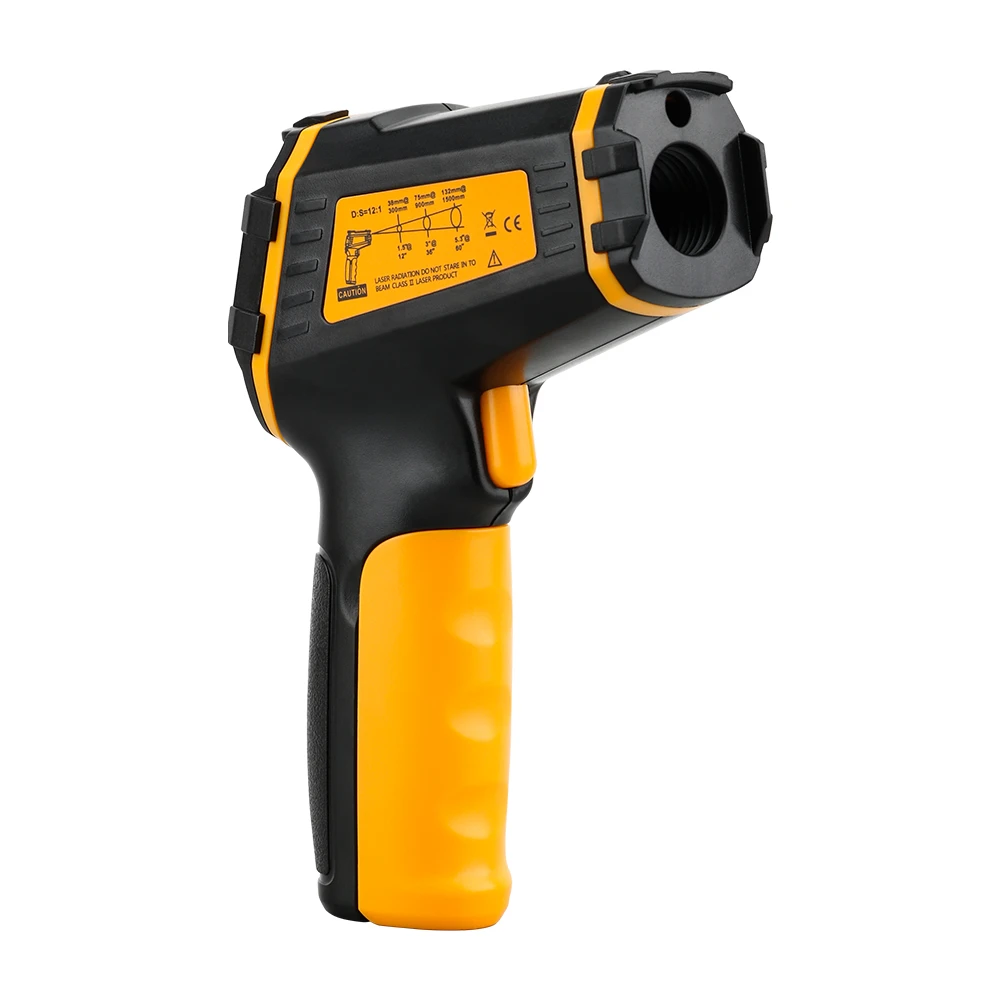
Common faults and precautions of infrared thermometer guns
1. Influence of environment and background radiation: When conducting infrared detection of outdoor power equipment, the infrared radiation received by the detection instrument not only includes the radiation emitted by the corresponding part of the equipment under inspection, but also includes reflections from other parts of the equipment and the background, as well as direct Incoming solar radiation. These radiations will cause interference to the temperature of the part to be measured on the equipment and bring errors to fault detection.
2. The attenuation of equipment radiation energy transmission will reduce the transmittance of radiation from the equipment under test as the distance between the detection instrument and the equipment under test increases, so the attenuation increases with the distance. Reducing the radiation contrast between the faulty part and the normal part of the equipment being tested will also reduce the target energy received by the infrared thermometer, causing the temperature displayed by the instrument to be lower than the actual temperature value of the fault point being measured, resulting in missed detection or false detection. Diagnostics, especially for detecting equipment faults with low temperature rise.
3. In order to reduce the radiation impact of solar radiation and surrounding high-temperature background, appropriate shielding measures should be taken during detection, or appropriate infrared thermometer filters should be installed on the infrared to filter out the sun and other background radiation. Select an instrument with appropriate parameters and a detection distance for detection, so that the part of the equipment being tested is within the field of view of the instrument, thereby reducing interference from back radiation.
4. Influence of atmospheric attenuation: The infrared radiation energy on the surface of the electrical equipment being measured is transmitted to the infrared thermometer through the air, which will be absorbed and attenuated by gas molecules such as water vapor, carbon dioxide, and carbon monoxide in the atmospheric combination and scattered by suspended particles in the air. Attenuating effects.
5. As the detection distance increases, the influence of atmospheric combination will become greater and greater. In this way, to obtain the accuracy of the target temperature, you need to try to choose a season when the ambient atmosphere is relatively dry and clean for detection: shorten the detection distance as much as possible without affecting the accuracy, and at the same time, you need to make a reasonable distance for the temperature measurement results. Correction to measure the actual temperature value.
6. Influence of meteorological conditions: Harsh meteorological environments (rain, snow, fog, strong wind, etc.) will have an adverse impact on the temperature detection of infrared thermometer equipment, often giving false fault phenomena. In order to reduce the impact of meteorological conditions, try to conduct detection at night when there is no rain, no fog, no wind and the ambient temperature is relatively stable.
7. In order to reduce the impact of the environment and background radiation, when using an infrared thermometer on outdoor electrical equipment, try to do it on a cloudy day or during sunset and evening when there is no light. This can prevent the influence of direct incident, reflected and scattered solar radiation; for indoor equipment, you can turn off the lighting and avoid the influence of other radiation.
8. For highly reflective equipment surfaces, appropriate measures should be taken to reduce the impact on solar radiation and radiation from surrounding high-temperature objects, or the detection angle should be changed to find the best angle to avoid reflection for detection.