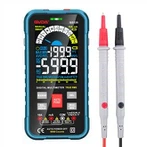
Common Problems and Troubleshooting of Digital Multimeters
Ø Most damages to digital multimeters are caused by incorrect measurement range settings. For example, if the resistance range is selected when measuring AC mains voltage, the internal components of the multimeter can be damaged instantly once the test probes touch the mains power. Therefore, always verify that the measurement range is correct before taking any measurement with a multimeter. After use, set the selector switch to AC 750 V or DC 1000 V. This prevents damage to the digital multimeter even if an incorrect parameter is measured by mistake next time.
Ø Some digital multimeter failures result from voltage or current exceeding the measuring range. Measuring mains voltage on the 20 V AC range, for instance, will easily damage the AC amplifier circuit and disable the AC‑measuring function. Exceeding the selected range during DC voltage measurement may also lead to internal circuit faults. When the actual current exceeds the current‑measurement range, usually only the internal fuse will blow without further damage. Therefore, when measuring an unknown voltage, start with the highest‑voltage range, then switch to an appropriate lower‑range setting after obtaining a rough reading for more accurate results. If the voltage to be measured far exceeds the multimeter's maximum range, high‑resistance test probes must be used, such as for measuring CRT anode high‑voltage and focus high‑voltage in black‑and‑white televisions.
Ø The maximum DC‑voltage range for most digital multimeters is 1000 V. Generally, voltages below 1000 V DC will not damage the instrument. Voltages above 1000 V, however, carry a high risk of damage. Note that the maximum measurable voltage varies among different multimeter models. For voltages beyond the instrument's range, a resistor voltage‑divider network should be adopted. In addition, when measuring high DC voltages between 400 V and 1000 V, ensure firm, stable contact between test probes and measurement points. Any probe vibration may cause inaccurate readings, instrument damage, or even a blank display in severe cases.
Ø Never perform resistance measurements on live circuits.