Correct Methods for Measuring Leakage Current with a Digital Multimeter
A digital multimeter (DMM) is a multifunctional measuring tool that can be used to measure various electrical parameters such as voltage, current, and resistance. A digital multimeter is also a very useful tool for measuring electrical leakage. Leakage refers to the current that should not flow in a circuit, such as current leakage to the ground wire or other non-conductive parts due to insulation damage. Below are the methods and precautions for measuring electrical leakage using a digital multimeter.
Methods for measuring electrical leakage
Before conducting any measurements, please ensure that you have appropriate personal protective equipment, such as insulated gloves and glasses.
Disconnect the main isolation switch of the user's power supply incoming line, turn off all electrical loads of the user, such as unplugging the refrigerator plug, disconnecting the water pump switch, etc.
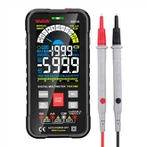
Place the gear of the digital multimeter in the 200M range of the ohm range, with one probe on one of the two output lines on the load side and the other probe touching the wall, preferably the grounding wire or temporary grounding wire. After the number displayed on the multimeter stabilizes, read out the insulation resistance value of the main circuit. If the insulation resistance value is less than 0.5 megaohms, then there is a problem with the main circuit; If the insulation resistance is above 0.5 megohms, it can be ruled out that there is a problem with the main circuit. Measure another wire using the same method, check the value, and determine if there is a problem with the main circuit.
Check the insulation resistance values of the branches and various electrical appliances, and use the same method to test them one by one until the fault point is found.
Based on the measured leakage current, the severity of the leakage can be determined. Normally, any detectable leakage should be taken seriously and require further inspection and repair.