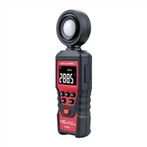
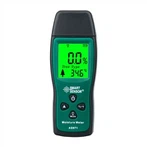
Current clamp and clamp meter: the difference between the two and application scenarios in detail
Current clamps and clamp meters are widely used electrical measurement tools in today's electrician world. They are designed to measure current to help electricians locate faults and ensure the safe operation of circuits. While both current clamps and clamp meters can measure current, there are some differences in their principles, measurement ranges, and usage scenarios. This article will delve into these differences to help you better select and apply these two tools in practice.
I. Principle
The working principle of current clamp is based on Ampere's law and Faraday's law of electromagnetic induction. It measures the magnitude of the current through electromagnetic induction by passing a wire through the opening of the current clamp. The opening of the current clamp is made of magnetic material and can be placed on a grounded wire without interrupting the circuit.
Clamp meters, on the other hand, use principles such as Hall sensors or thermocouples to measure current. Their operation is mainly based on the magnetic field effect produced by the current or the thermal effect between the resistance and the current. Clamp meters usually require the wire to be clamped into the clip in order to accurately measure the current value.
Second, the measurement range
Current clamp and clamp meter in the measurement range there are some differences. Generally speaking, the current clamp is able to measure a large range of current, usually from a few milliamps to several thousand amps, while the clamp meter has a relatively small measuring range, usually between tens of milliamps and tens of amps. Therefore, in the need to measure a larger current in the scene, the current clamp is a more suitable choice; and in the need to measure smaller currents or the need for higher accuracy in the scene, the clamp meter is more advantageous.
Third, the use of the scene
Current clamp and clamp meter in the use of the scene there are differences. Because of its large measuring range and easy to operate characteristics, current clamp is often used in high-voltage, high-current scenarios, such as power system maintenance, industrial equipment troubleshooting, motor operation detection. At the same time, current clamps can also be used to monitor the direction and phase of current in AC circuits, helping to detect phase misalignment problems in circuits.
Clamp meters, on the other hand, are suitable for scenarios that require higher precision measurements, such as the maintenance of electronic equipment and the troubleshooting of electrical appliances. Especially when the waveform of AC current needs to be observed and analysed, the clamp meter is more advantageous.
In practice, according to the specific measurement needs and scene characteristics, electricians generally have both current clamp and clamp meter, in order to complete the work task more comprehensively and accurately.
In summary, the current clamp and clamp meter as an important electrician in the field of electrical measurement tools, they are in the principle, measurement range and the use of the scene there are differences. Understanding these differences can help electricians in the actual work of the correct choice and give full play to their advantages. Of course, in the use of current clamp and clamp meter, but also need to pay special attention to the safe operation, in order to ensure the safety of personnel and equipment.