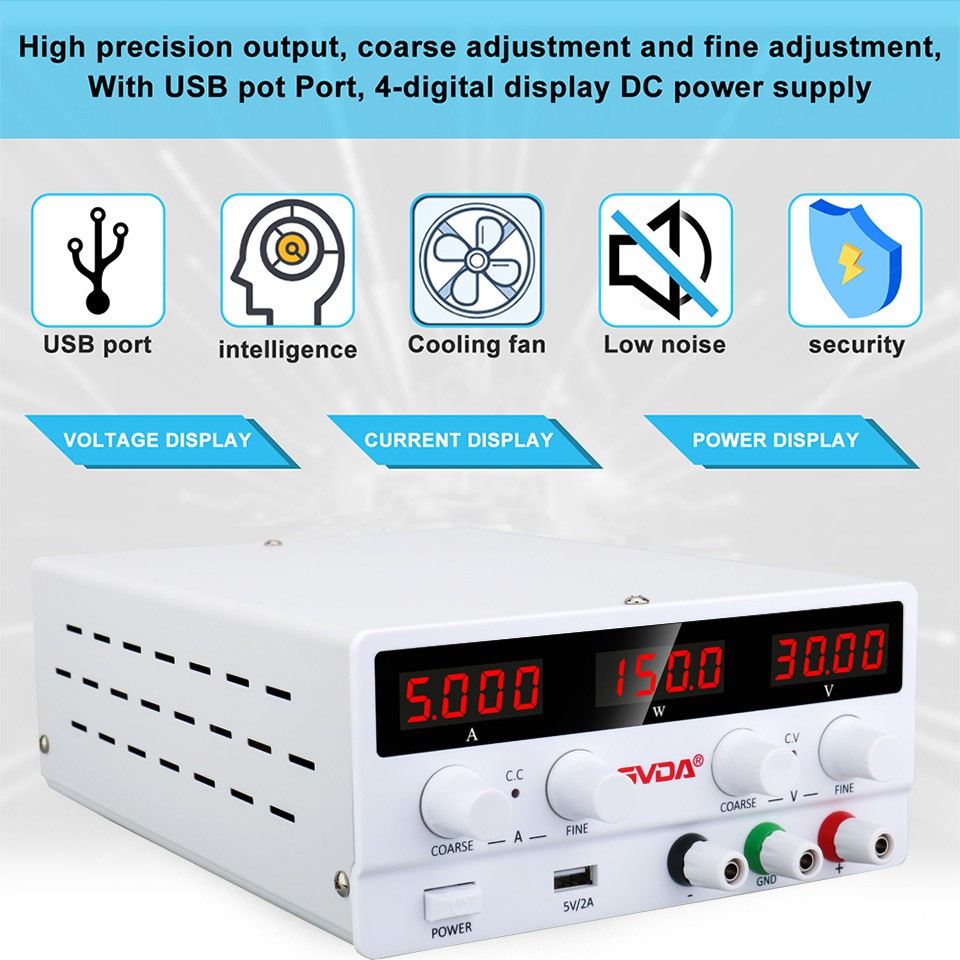
Definition of Programmable DC Power Supply
Programmable DC power supply is an electronic device that controls output voltage and current through software interfaces. It adopts advanced digital control technology and soft switching device technology, which can receive instructions provided in digital form from the outside, and output stable DC voltage or current according to specific parameters and programs. This power supply device not only has a wide range of voltage and current output, but also has high precision, high stability, and rich protection functions, making it an indispensable tool in modern electronic testing and engineering fields.
The working principle of programmable DC power supply
The working principle of programmable DC power supply is based on digital control technology and power conversion technology. It usually consists of an input rectification and filtering circuit, a power conversion circuit, a switching regulator circuit, and an output rectification and filtering circuit. After the input AC power is rectified and filtered, it enters the power conversion section, where the current is adjusted by controlling the on and off of switching devices (such as MOSFET) to regulate the output voltage. Then, the switch voltage regulator circuit is used for current stabilization and current limiting protection, and finally the output is rectified and filtered before supplying power to the load.
Digital control technology plays a crucial role in programmable DC power supplies. It enables the power supply to receive and process external commands such as voltage, current settings, output modes, etc., and output the corresponding voltage or current according to the command requirements. At the same time, digital control technology can also monitor the working status of the power supply in real time, such as output voltage, current, temperature and other parameters, and take timely measures for protection in case of faults or abnormal situations.