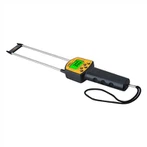
Determination of carbon dioxide detector in beer fermentation process
Carbon dioxide is one of the main by-products in the beer fermentation process. After the detection of the carbon dioxide detector, it is found that the theoretical calculation of each 1kg of maltose fermentation can produce 0.514 tons of carbon dioxide, and each 1kg of glucose fermentation can produce 0.489 tons of carbon dioxide. Due to the emission of impure carbon dioxide at the beginning of fermentation, the carbon dioxide is dissolved in a part of the wine, the actual recovery of carbon dioxide is usually 45%-70%, and the empirical data is 25-27 kg after recovery.
Mainly through carbon dioxide detector to measure the influencing factors of carbon dioxide for analysis. Through the detection of a large number of finished beer with different concentrations and specifications under the same sake tank, the same filling conditions, the same measuring device, and the same operator at any time, it is found that the influencing factors are diverse. Different factors should be controlled to a certain extent for its production.
When the carbon dioxide detector measures the carbon dioxide content in beer, the measured value of the instrument will not only change with the pressure, but also the temperature change is more obvious. As the temperature rises, there will be a positive distribution. The value decreases as the volume of air in the bottle neck of the sample being measured increases.
When nitrogen is used as the backup gas, the content of the bottleneck air will be very high, and the impact on the measured value of the carbon dioxide detector is much more obvious than when carbon dioxide is used as the backup gas. Temperature control is the most important thing. Selecting a constant temperature water bath with relatively high precision and strictly controlling the temperature (25±0.1°C) and time (20-30min) of the beer water bath can ensure the accuracy of the carbon dioxide detector's measurement results.
The pressure control of the sample is also very important. During the measurement process of the carbon dioxide detector, the valve should be controlled so that the gas flow rate cannot be too large, otherwise a large amount of gas will flow out, resulting in incomplete reaction of carbon dioxide and lye, resulting in the final The result is low. At the same time, wait until the liquid level is completely still, and then read the static pressure volume of the air in the bottleneck. If the bottleneck air volume is found to be relatively high after the first discharge of air, the operation must be repeated 2-3 times.