Digital and Analog Display Functions of Multimeters
In Terms of Accuracy and Resolution
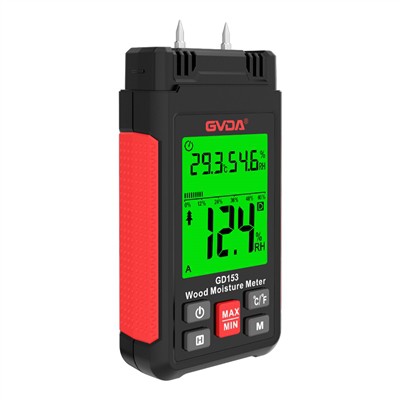
Digital displays have significant advantages, as measured values can be shown in three or more digits.
Analog pointers are less precise in accuracy and resolution, as you have to estimate the pointer's position.
Bar graphs display signal changes and trends similarly to analog pointers but are more durable and less prone to damage.
Resistance
Measuring Resistance in Ohm Mode: Resistance values vary widely, from milliohms (mΩ) for contact resistance to billions of ohms for insulation resistance. Many digital multimeters can measure as low as 0.1 ohms and as high as 300 megohms (300,000,000 ohms). For extremely high resistances, Fluke multimeters display "OL" to indicate the value exceeds the 量程 (measurement range). This also appears when measuring an open circuit.
Key Precautions:
Always turn off the circuit power before measuring resistance to avoid damaging the meter or circuit board. Some digital multimeters offer protection against accidental voltage input in resistance mode, though protection capabilities vary by model.
When measuring low resistances, subtract the test lead resistance from the measured value. Typical test leads have a resistance of 0.2Ω to 0.5Ω. Replace them if their resistance exceeds 1Ω.
If a digital multimeter provides a DC voltage of less than 0.6V for resistance measurement, it can measure resistors isolated by diodes or semiconductors on a circuit board without removing them.