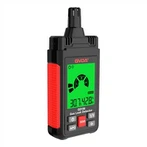
Digital multimeter and pointer multimeter measurement voltage error analysis
If the measured voltage is the mains, that is, 50Hz AC, both meters are qualified, it can only mean that the measured voltage internal resistance is too large. The same frequency under the pointer multimeter and digital multimeter affect the results of voltage measurement of the biggest factor is the internal resistance is different, the difference is very large, not in an order of magnitude. When the measured voltage internal resistance is small, the difference is not obvious, and when the measured voltage internal resistance is large, the measurement results will differ greatly.
This situation is possible that the measured voltage is not real 220V firewire power line, or firewire through some kind of electrical appliances measured voltage, or electrical appliances leakage shell voltage.
Excluding the above possibilities, can only mean that one of the two tables are not allowed, need to repair and adjust.
Measurement of voltage error, first of all, you have to figure out, the frequency of the measured AC voltage is how many Hz, this voltage is not a pure sine wave?
Now commercially available all kinds of multimeter, its manual are labeled with the table in the measurement of AC voltage frequency response range and AC waveform. For a variety of ordinary digital multimeter, its frequency response is generally 40-1000Hz, and is required to be a sine wave (distortion ≤ 1%). The measured AC voltage beyond the above range does not guarantee the measurement accuracy. This is due to the majority of digital multimeter inside the AC / DC (AC / DC) conversion circuit is basically a low-power dual op-amp TL062 to design, the op-amp GBW (gain bandwidth product) is limited, so the digital multimeter can not measure high-frequency AC voltage (of course, but also with the multimeter's voltage divider resistor is compensated).
As for the general pointer multimeter (which was first invented by the Americans, 100 years ago), its internal structure is quite simple, the internal head of a high-sensitivity + diode rectifier + voltage divider resistor (a few pointer multimeter in order to improve the sensitivity of the head and the divider resistor between the addition of operational amplifiers composed of AC amplifiers), so this old, inexpensive multimeter measurement accuracy is not comparable to the digital multimeter. Can not be compared with the digital multimeter, this table voltage divider resistor are generally not capacitive compensation, so its frequency response is generally 40-400Hz.
Two meters to measure the same AC voltage difference of tens of V, the first thing you need to test their voltage divider resistor network, whether one of the resistors change value? If they are normal, for the pointer multimeter you can also look at its head pointer can point to zero? For digital multimeters, you can see if the calibration potentiometer for the AC voltage block is loose?
By the way, if you want to accurately measure the AC voltage of any waveform, it is recommended to buy a true rms (TRMS) multimeter, which can accurately measure the AC voltage of various waveforms, such as sine, triangle, rectangle, etc., and has nothing to do with distortion.