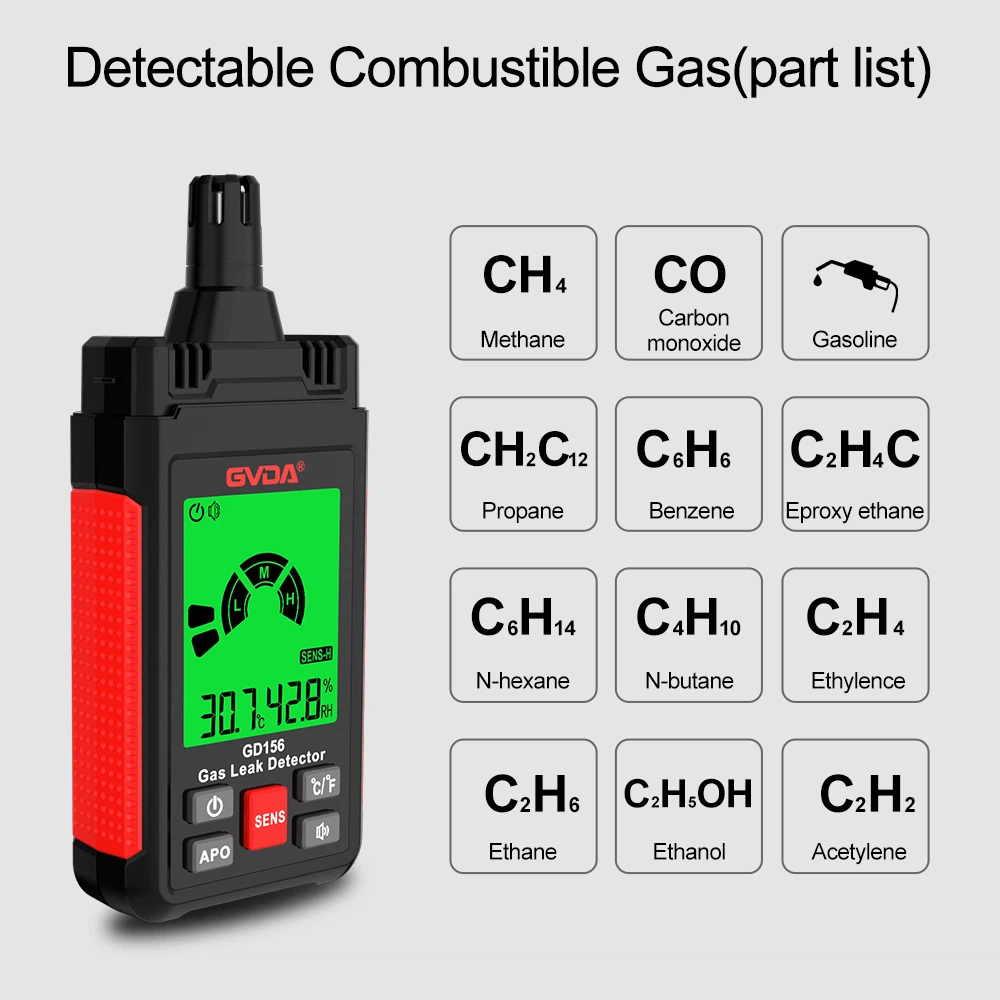
Does ambient temperature affect the hydrogen leak detector?
1, The direct impact of temperature on the core sensor of hydrogen leak detector
The detection accuracy and stability of the hydrogen leak detector mainly rely on the normal operation of the core sensor, and temperature changes can directly interfere with sensor performance:
Taking catalytic combustion sensors as an example, they generate detection signals through the combustion reaction of hydrogen gas under the action of a catalyst. When the ambient temperature is too low, the activity of the catalyst will significantly decrease, the oxidation reaction rate of hydrogen will slow down, resulting in a decrease in sensor sensitivity, which may not be able to capture low concentration hydrogen gas leaks in a timely manner, causing false alarms; If the ambient temperature is too high, the internal chemical reaction of the sensor will be too intense, which will not only cause drift in the detection data, but also accelerate catalyst loss and shorten the service life of the sensor.
For electrochemical sensors, temperature changes can affect the activity of the internal electrolyte. Under low temperature conditions, the viscosity of the electrolyte increases and the migration speed of ions slows down, which can lead to a prolonged response time of the sensor and an inability to quickly provide feedback on hydrogen gas leakage; High temperature may cause electrolyte evaporation, damage the internal structure of the sensor, directly affect detection accuracy, and even cause sensor failure.
2, Temperature indirectly affects detection results by altering the physical properties of hydrogen gas
The physical properties of hydrogen will change with temperature, indirectly affecting the detection performance of hydrogen leak detectors
The density of hydrogen gas varies with temperature fluctuations, and the diffusion rate and spatial distribution of hydrogen gas with the same concentration differ in different temperature environments. For example, in high-temperature environments, the diffusion rate of hydrogen gas accelerates, which may cause the detector to receive high concentration gas signals in a short period of time, leading to false alarms; In low-temperature environments, the diffusion rate of hydrogen slows down, making it difficult to quickly reach the detection area after leakage, which may result in the detector being unable to capture the leakage signal in a timely manner, increasing safety hazards.
3, The Influence of Temperature on the Circuit System of Hydrogen Leakage Detector
The circuit system of the hydrogen leak detector contains multiple temperature sensitive electronic components, and when the temperature fluctuates too much, the parameters of these components will change:
Sudden temperature rise or drop may lead to unstable performance of components such as resistors and capacitors in the circuit, affecting the accuracy of signal processing and transmission, and ultimately causing deviations in detection data. Long term exposure to extreme temperature environments may accelerate the aging of circuit components, reduce overall equipment reliability, and increase the probability of failure.
4, Targeted measures to address the impact of temperature
To reduce the interference of environmental temperature on the hydrogen leak detector and ensure stable detection performance, the following measures can be taken:
When selecting equipment, attention should be paid to the applicable temperature range. Based on the temperature conditions of the usage scenario, a hydrogen leak detector that can work normally within this range should be selected to reduce the risk of temperature interference from the source;
Regularly calibrate the detector, especially during seasonal changes and significant temperature fluctuations, to correct detection errors caused by temperature and ensure data accuracy;
If the ambient temperature fluctuates violently or is at an extreme temperature, temperature control auxiliary measures can be taken, such as installing heat dissipation devices for equipment in high temperature environments and adopting insulation protection in low temperature environments to maintain stable working environment temperature of the equipment.