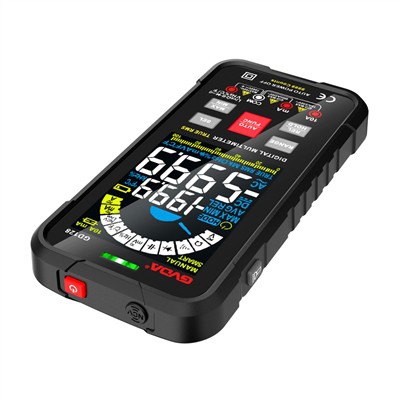
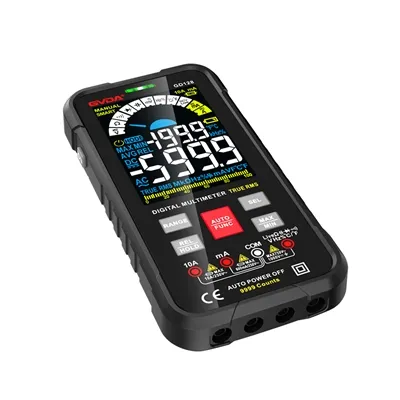
Electrode material of water quality dissolved oxygen analyzer
The dissolved oxygen analyzer for water quality is a device for measuring dissolved oxygen in water. Oxygen is reduced by the working electrode through the diaphragm, generating a diffusion current proportional to the oxygen concentration. By measuring this current, the concentration of dissolved oxygen in water is obtained. According to different concentrations, diaphragm electrodes are divided into two types: polarographic and primary cell. The polarographic diaphragm electrode uses silver silver chloride as the counter electrode, with potassium chloride as the electrolyte inside the electrode and a polyethylene and polytetrafluoroethylene film with a thickness of 25-50 μ m on the outside of the electrode. The film blocks the exchange of liquid inside and outside the electrode, allowing dissolved oxygen in water to penetrate into the inside of the electrode. The voltage between the two electrodes is controlled between 0.5-0.8V, and the concentration of dissolved oxygen can be determined by measuring the diffusion current through an external circuit. The primary battery type uses silver as the positive electrode and lead as the negative electrode. The anode and silver electrodes are immersed in a potassium hydroxide electrolysis cell to form two and a half cells, with the outer layer also sealed with a thin film. Dissolved oxygen is reduced at the anode, generating a diffusion current. The concentration of dissolved oxygen can be obtained by measuring the diffusion current.
The electrode material of the dissolved oxygen analyzer for water quality:
The electrode of the dissolved oxygen analyzer for water quality is a current type electrode covered with a breathable film. It can be divided into two types: primary battery type and polarographic type.
1. Primary battery type electrode
The surface of the primary battery type electrode requires a smooth surface, and its area is proportional to the reduction current. The general diameter is 5-10mm. Its reduction current is 5-25 μ A at 28 ℃, so it can be directly connected to an automatic potential difference recorder with a full range of 5 or 10 mV through series connection without the need for a specialized electronic amplifier.
2. Polarographic electrodes
The cathode surface of a polarographic electrode is made very small, with a diameter generally in the range of 1-50 μ m, resulting in a reduction current of nA level. Therefore, a specialized electronic amplification device is required. The anode material of the anode primary battery type also requires high purity of over 99.999%. Generally, the anode is made into a cylindrical shape, and its surface area needs to be several tens of times larger than the cathode area. This is easy for polarographic electrodes, so they can be made smaller.