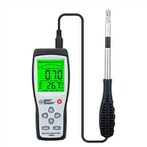
Explanation on Imaging Principle of Thermal Night Vision Device
Thermal imaging night vision devices can produce realistic and clear thermal images in situations of complete darkness, light mist, and smoke. It can seamlessly connect with widescreen navigation systems and multifunctional navigation systems. The camera lens can freely rotate 360 degrees horizontally and pitch up and down ± 90 degrees, allowing you to experience the sensory enjoyment and safety guarantee brought by military technology. Designed to enhance the visual ability of drivers. The system can output clear thermal images of the road ahead in severe weather conditions such as dark nights, haze, and low visibility conditions such as glare from car lights, effectively improving the driver's visual range. At the same time, the pedestrian recognition and front vehicle collision alarm functions can detect pedestrians, vehicles, and obstacles in advance, greatly improving driving safety.
Principle of thermal imaging night vision device: Thermal imaging is passive infrared, which relies on receiving infrared radiation emitted by the temperature (thermal energy) of an object, processing it into an image, and displaying it. Generally, the image is gray white regardless of day or night.
Thermal imaging is not active infrared, and thermal imaging night vision devices themselves do not emit infrared radiation, but only receive infrared radiation from the object. Therefore, it is easy to conclude that as long as thermal imaging can receive the infrared radiation emitted by the object, there will be image output. Conversely, if infrared radiation cannot be received, the image of the object we want to see cannot be reflected. So now some of the questions we are asking, such as whether thermal imaging can see through, penetrate walls, view people and objects inside cars, and penetrate glass, have certain results. If you go through walls or glass, the walls block the infrared rays, and the thermal imaging night vision device cannot receive the infrared rays at all, making it impossible to detect objects on the other side of the walls and glass. That is to say, in order to produce an image, there must be no completely sealed object that blocks all infrared rays, otherwise infrared imaging will definitely not be received. In environments such as trees and grass, thermal imaging can still detect objects with temperatures higher than those of plants, as they are not completely blocked from infrared radiation. If there are people and animals behind grass and trees, it is obvious that there is a temperature difference value. Objects with high temperature will shine, while objects with low temperature will appear darker. Thermal imaging is actually temperature difference imaging. Objects with high temperatures emit stronger infrared radiation, while objects with low temperatures emit relatively weaker infrared radiation.
When a person walks behind the glass, they can no longer see the image of the person. This is because the glass blocks the infrared radiation of the person outside, and the thermal imaging night vision device cannot receive the infrared radiation, making it impossible to display the presence of a person in the image. Two people are standing inside, with people in the image and people on the glass. This is because the infrared of the person is received by the thermal imaging of the person. In addition, there are people on the glass because the infrared of the person is emitted in all directions, and the infrared emitted on the glass is reflected back by the glass and received by the thermal imaging night vision device. Therefore, we can see the image of the person on the glass. When people wear clothes, most of the infrared is blocked by the clothes, and the body is relatively black because the temperature of the clothes is much lower than that of the head. The head is brighter when the temperature is higher, and the clothes are darker when the temperature is lower. At this point, someone placed two palms on the clothes for 2 seconds, and we found that there were two palms printed on the clothes. This is because the temperature of the palms was transmitted to the clothes, and the temperature of the palms disappeared after 2 to 3 seconds. It is because the temperature of the palms on the clothes slowly dissipated and disappeared.