Explosion Limits of Combustible Gas-Air Mixtures
The explosion limit of combustible gases and air mixtures is related to the following factors: the type and chemical properties of the combustible gas; Purity of combustible gases; Uniformity of combustible gas and air mixture; The form, energy, and ignition location of the ignition source; The geometric shape and size of explosive containers; The temperature, pressure, and humidity of a mixture of combustible gases and air.
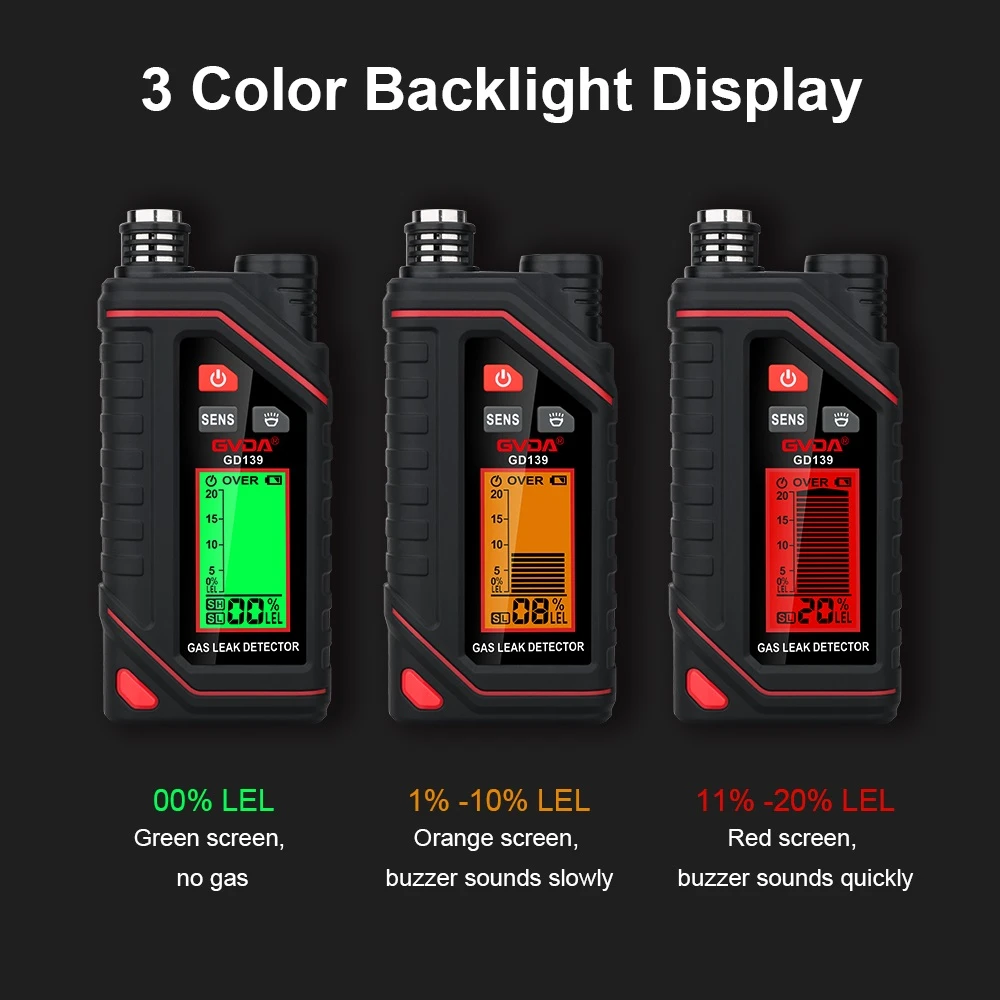
4 Gas detectors are classified according to their detection objects, including combustible gas (including methane) detection alarms, toxic gas detection alarms, and oxygen detection alarms. According to the principle of detection, combustible gas detection includes catalytic combustion type, semiconductor type, thermal conductivity type, and infrared absorption type; Toxic gas detection includes electrochemical and semiconductor types, etc; Oxygen detection has electrochemical types, etc. Classified by usage, there are portable and fixed types.
Classified by usage location, there are conventional and explosion-proof types. Classified by function, there are gas detectors, gas alarms, and gas detection alarms. Classified by sampling method, there are diffusion type and pump suction type
Explosive environments and environments where explosion-proof electrical equipment contains explosive mixtures are called explosive environments. Electrical equipment designed and manufactured according to specified conditions without causing explosive mixtures to explode in the surrounding area shall become explosion-proof electrical equipment for explosive environments.
The country has clear regulations on various explosion-proof types of explosion-proof electrical equipment used in explosive environments. In dIICT6, d indicates that the explosion-proof type is explosion-proof, II indicates electrical equipment used in factories, C indicates the strictness level of explosive gas mixtures with large test gaps or small ignition current ratios (A, B, C levels), and T6 indicates the strictness level (85 ℃) that allows for high surface temperatures
Bus and branch lines refer to the connection method between the controller and the detector. If each detector requires a wire to communicate with the controller, this connection method is called a branch line connection. If several detectors can share a single wire to communicate with the controller, this connection method is called bus connection