Factors to Be Considered in the Selection of Multi-gas Detectors and Technical Communication
1. Confirm the type and concentration range of the gas to be detected:
The types of gases encountered by each production department are different. When choosing a gas detector, all possible scenarios should be considered. If methane and other less toxic hydrocarbons are predominant, choosing an LEL detector is undoubtedly more suitable. This is not only because the principle of LEL detector is simple and widely used, but also because it has the characteristics of easy maintenance and calibration. If there are toxic gases such as carbon monoxide and hydrogen sulfide, it is necessary to prioritize the use of a specific gas detector to ensure the safety of workers. If there are more organic toxic and harmful gases, considering their low concentration that may cause poisoning to personnel, such as aromatic hydrocarbons, halogenated hydrocarbons, ammonia (amines), ethers, alcohols, lipids, etc., a photoionization detector should be selected instead of using an LEL detector, as this may result in casualties.
2. Determine the usage scenario:
According to different industrial environments, we can divide gas detectors into three types: fixed gas detectors, portable gas detectors, and composite gas detectors. Among them:
1) Fixed gas detector: Fixed gas detectors can be installed at specific detection points to detect specific gas leaks. They are generally two-piece, with a detection head composed of sensors and transmitters installed as a whole at the detection site, and a secondary instrument composed of circuits, power supplies, and display alarm devices installed as a whole in a safe place for easy monitoring.
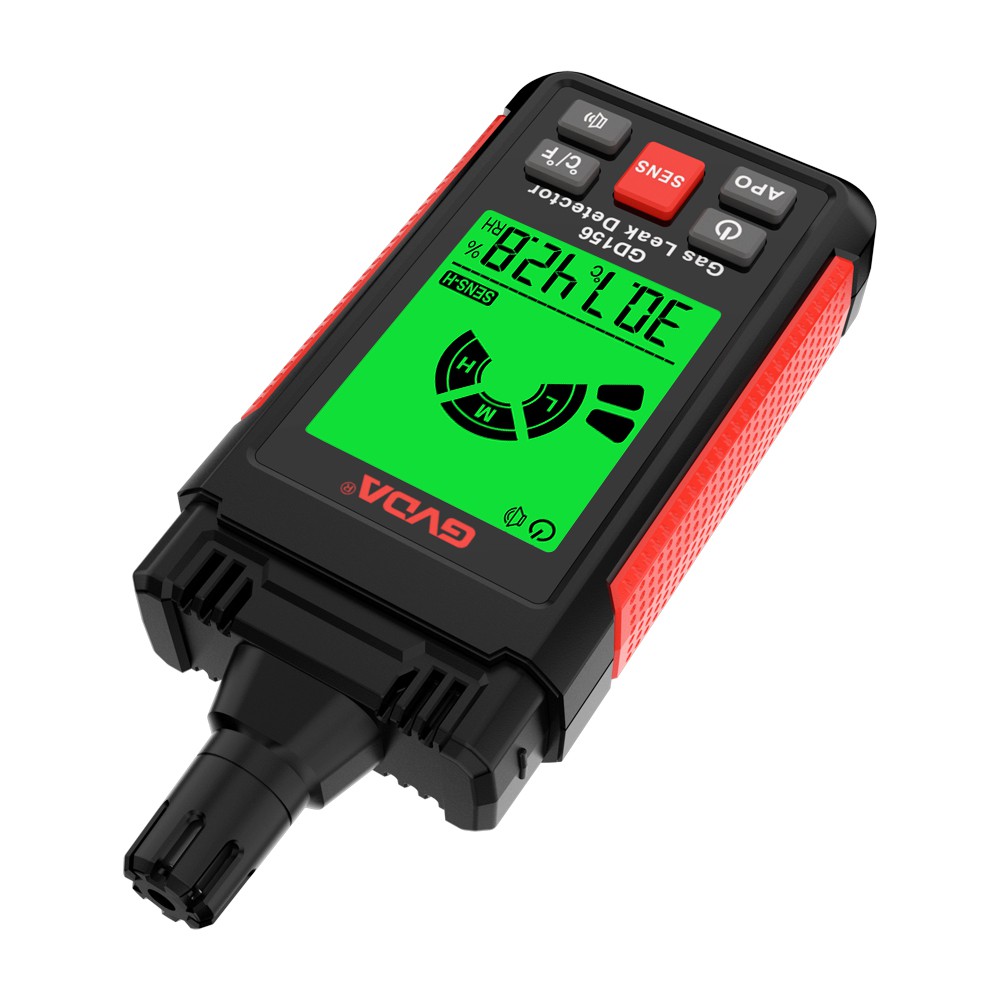
2) Portable gas detector: Portable gas detectors have the advantages of easy operation, compact size, and can be carried to different production sites. If used in open environments such as open workshops as safety alarms, portable diffusion gas detectors can be used because they can continuously, real-time, and accurately display the concentration of toxic and harmful gases on site; If entering a confined space, such as reaction tanks, storage tanks or containers, sewers or other underground pipelines, underground facilities, agricultural enclosed grain warehouses, railway tankers, shipping cargo holds, tunnels, etc., personnel must undergo testing before entering, and testing must be conducted outside the confined space.
3) Composite gas detector: The composite gas detector can be equipped with multiple gas detection sensors on one instrument, so it has the characteristics of small size, light weight, fast response, and simultaneous display of multiple gas concentrations. Compared with general gas detectors, it is also more convenient to use.