Fault maintenance example of regulated power supply
(1) There is voltage regulation and no voltage regulation
Before using the DC regulated power supply, it is generally necessary to warm up the power supply, and then adjust the potentiometer at the output end to judge whether the voltage adjustment range is normal and whether the voltage adjustment effect is obvious. After confirming that there is no abnormality, adjust the output end voltage to an appropriate value, and finally connect the load. If the voltage at the output terminal of the DC stabilized power supply is normal when it is no-load, but the voltage at the output terminal drops after the load is connected, it means that the voltage stabilizing circuit is faulty, that is, the voltage stabilizing power supply has voltage regulation but no voltage regulation.
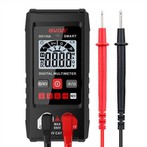
In view of this situation, use a multimeter to measure the on-off condition of the regulator tube collector and emitter in the voltage regulator circuit. If there is no abnormality, you can check whether the diode in the rectifier circuit has been damaged. Because if one diode is damaged, full-wave rectification will become half-wave rectification. When there is no load, if the capacity of the filter capacitor is large enough, it can still provide enough rectified output voltage to ensure the normal voltage regulation function; pressure effect.
(2) The output voltage is too high, no voltage regulation, no voltage stabilization
When the DC stabilized power supply is no-load, if the output terminal voltage exceeds the maximum value of the adjustable output voltage and cannot be adjusted independently, there are two reasons for the failure:
① In the composite adjustment tube composed of VT1 and VT2, there is a breakdown and short circuit between the collector and emitter of a transistor. At this time, the DC voltage obtained by the rectifier circuit is directly added to the output of the DC stabilized power supply through the short-circuited transistor. terminal, regulator function and
The voltage stabilization function will then fail.
② The collector or emitter of the amplifying tube in the sampling comparison circuit is disconnected, and the composite adjusting tube is subjected to the reverse voltage of the auxiliary power supply at this time, and the base current increases sharply, which makes the resistance between the emitter and the collector of the adjusting tube decrease sharply. Small, approximately can be seen as the rectified DC voltage directly added to the output of the regulated power supply.
(3) The voltage output of each gear is very small and there is no voltage regulation. There are three possible reasons for this failure:
① The rectifier circuit is faulty, and the rectifier diode is damaged, resulting in no rectified voltage being sent to the voltage stabilizing circuit.
② The auxiliary power supply in the comparison amplifier circuit is damaged, and there is no reference voltage, so the adjustment function cannot be realized.
③ The reverse breakdown and short circuit between the collector and emitter of the sampling amplifier tube causes the adjustment tube to fail to work normally.