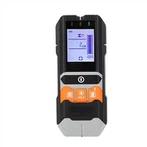
Four wrong uses of moisture meters
#1: Don't leave the meter in the active kiln
Kiln drying is an important part of the woodworking process. By drying lumber in a kiln, woodworkers can ensure that excess moisture does not cause unsightly warping or other defects in the final product.
A moisture meter is a very useful tool to ensure that kiln dried lumber is actually dry. However, it is important to be careful not to leave moisture meters in a hot kiln. Extreme temperatures can cause damage to sensitive electronic equipment, and moisture meters are no exception. Even if there are no outward signs of damage or charring, the circuitry inside the meter can be damaged.
It is important to be aware that short-term exposures, such as what happens when you walk into a kiln for a quick reading, should not usually be a problem with well-made hygrometers. The real problem occurs when the meter is left inside a hot kiln.
#2: Don't submerge the meter in water!
While hygrometers are designed to detect moisture, they are not meant to be actually submerged in water. When water gets inside the device, whether it's a pin, pinless or thermo-hygrometer, it can damage the circuit boards inside the device, causing them to short out just like any other electronic device.
This may sound like an obvious suggestion, but you may be surprised to learn that moisture damage is the cause of hygrometer failure.
In the case of pinless and pin meters, too much moisture on the reading element (contact pins on pin-type needles, scanning boards without pins) can lead to corrosion if left alone for too long. Solve this problem by cleaning the reading elements after use. Doing so will extend the life of the meter and maintain its accuracy.
#3: Don't take your meter apart!
Many manufacturers recommend that you don't take your electronics apart to try and fix the problem yourself. There's actually a good reason to follow this advice: simply trying to open it up can cause more damage to the inside of the device.
Most hygrometers are designed to be sealed. Opening the device in a non-sterile environment exposes the PC board to contaminants that can cause it to degrade. We recommend that you avoid attempting to move or modify parts inside the device.
Instead, try calling the manufacturer's hygrometer support line or checking the FAQs on their website to see if the problem you are experiencing has a solution that does not involve opening the enclosure. If not, send the device in for repair. The manufacturer should be able to fix the problem, and if not, they can replace it. Of course, this assumes that the hygrometer is still under warranty (and most warranties are voided by opening the unit's case).
#4: Don't throw your meter at someone else
You'd be surprised how many meters (and even other sensitive electronic devices) have been sent in for repair because someone took the device and clipped it to another person. Often, the person on the receiving end can't catch it and the device ends up hitting a wall or concrete slightly too hard.
This impact can result in a cracked enclosure and loose or damaged circuitry. Damaged housings can allow contaminants to enter the meter, while damaged circuitry can cause the meter to malfunction or not work at all.
Additionally, for meters with integrated pins, the pins are often very strong and sharp (they mean penetrating solid wood, after all). Because of their strength and sharpness, these pins can easily cause injury to anyone who tries to grab it. You wouldn't put knives and saw blades through a room to anyone else, and the same rule should apply to your hygrometer.
It's worth taking the extra 3-6 seconds to walk across the room and give the meter to another person rather than throwing it across the room and risking damage to the meter or injury to someone else.