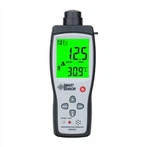
Gas detectors require frequent calibration and testing
Gas detectors are operated and measured using a relative comparison method, first calibrating the gas detector with a zero gas and a standard concentration of gas. Toxic and harmful gas detectors are also similar to other analytical gas detectors. The standardized curve is stored in a gas detector. During measurement, the gas detector compares the electrical signal generated by the concentration of the gas to be measured with the electrical signal of the standard concentration, and calculates the accurate gas concentration value.
Therefore, it is essential to perform zero calibration on the gas detector at any time and regularly calibrate the gas detector to ensure accurate measurement. It should be noted that many gas detectors currently have replaceable detection sensors, but this does not mean that a detector can be equipped with different detector probes at any time. Whenever replacing the probe, in addition to requiring a certain sensor activation time, it is also necessary to recalibrate the gas detector operation. In addition, it is recommended to perform response testing with standard gas before using various gas detectors to ensure that the gas detectors truly function for maintenance.
Combustion gas detector sensor
Catalytic combustion gas sensors selectively detect flammable gases: anything that can burn can be detected; Anything that cannot burn has no response from the sensor. Of course, there are many exceptions to the statement 'anything that can burn can be detected', but overall, the above selectivity is valid.
Catalytic combustion gas sensors have accurate measurement, fast response, and long lifespan. The output of sensors is directly related to the explosion hazard of the environment and is a dominant type of sensor in the field of detection.
Disadvantage: No selectivity within the flammable gas range. Working in a dark environment poses a risk of ignition and explosion. Most organic vapors have a toxic effect on sensors.
At present, the main suppliers of this sensor are in China, Japan, and the United Kingdom (the country of invention)! At present, China is the largest user (coal mine) of this sensor and also has the best sensor production technology. Although various agents constantly interfere with society's understanding of this sensor in their promotion, after all, the mainstream manufacturers of catalytic combustion gas sensors are in China.