Getting Started with Adjustable Switching Power Supplies
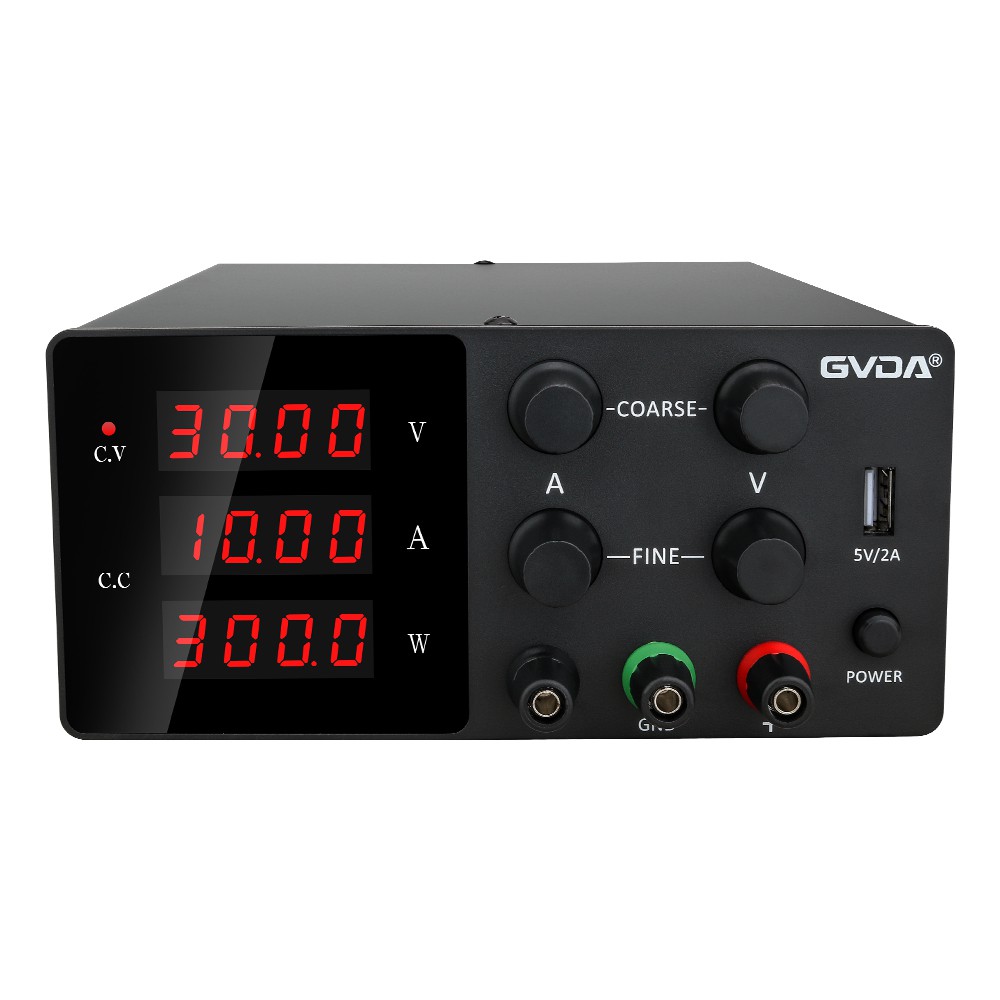
The supplier of the adjustable switch. The supplier of the power supply is the input AC power. The supplier of the AC power converts it into DC through rectification and filtering, and then converts it into high-frequency AC power, which is supplied to the transformer. The supplier of the transformer transforms it, thereby generating the required one or more sets of voltages.
Introduction
The adjustable switching power supply means that the input AC power is rectified and filtered, converted into DC power, and then converted into high-frequency AC power to be supplied to the transformer for transformation, thereby generating one or more sets of required voltages! The reason for converting to high-frequency AC power is high frequency The efficiency of frequency AC in the transformer circuit is much higher than that of 50HZ. Therefore, the switching transformer can be made very small, and it is not very hot when working!! The cost is very low. If 50HZ is not changed to high frequency, then the switching power supply is meaningless. .
Adjustable switching power supply workflow
Power supply → input filter → full bridge rectification → DC filter → switching tube (oscillation inverter) → switching transformer → output rectification and filtering.
details
1. Adapt to the needs of production development
The original power supply can be used, and on this basis, the number of modules can be flexibly increased or reduced, the current can be increased or decreased, and the utilization rate of the equipment can be improved.
2. Improve production and operation reliability
The power supply is designed in N+1 mode. Under normal circumstances, all modules are involved in the work. If the equipment fails, the power supply will not stop. The system will automatically reduce current operation and exit the faulty unit without affecting production.
3. Easy maintenance
All module units are universal, and only a few module units need to be backed up to freely replace faulty modules, making maintenance relatively simple.
4. Digital control
Each module unit uses a microprocessor as the control core and mainly uses software programs to implement automatic current sharing and other control schemes. It has flexible control, high precision, fast dynamic response, few components and high reliability.
5. The entire power supply system adopts an intelligent main circuit structure to realize module hot swapping, current sharing control\fault detection\fault information display functions, and the user interface is intuitive and friendly.