Guide to Selecting Portable Gas Detectors
Many users feel confused about choosing between diffusion type and pump-suction type when purchasing portable gas detectors. In fact, diffusion and pump suction are only two working modes of gas detectors, which are introduced below.
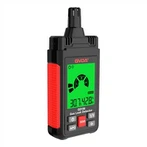
First of all, a diffusion gas detector measures the concentration of target gases surrounding the instrument in open spaces and serves as personal protective equipment for operators. However, pump-suction gas detectors are required for areas inaccessible to personnel.
Typical scenarios include the interior of pipelines, sewers, tanks, cargo holds and grain silos. Portable pump-suction gas detectors are available with external pumps or built-in pumps. A gas detector equipped with an external pump works as a diffusion detector when the pump is uninstalled; users can attach the pump as needed. Compound multi-gas detectors support optional external pump installation.
The sampling distance of an external pump can reach 20 meters. For detectors with built-in pumps, such as model X‑AM7000 available in both diffusion and pump-suction versions, the sampling distance can be up to 45 meters. Therefore, users shall select the device according to actual application environments.
These detectors are widely used in chemical engineering, mining, iron and steel, petroleum, pipeline inspection, pharmaceutical manufacturing, decoration, fuel processing, food production, laboratories, gas leakage inspection and other industries. Pump-suction gas detectors are designed for special working conditions. Suitable for sites with explosion risks and toxic gas leakage such as underground pipelines and mines, they can fully protect personnel safety and production equipment.
Jet self‑priming pumps are produced in multiple series with different motor power, suction head, delivery head and flow rate, resulting in different prices. In addition, pumps with copper wire windings and aluminium wire windings differ in cost.