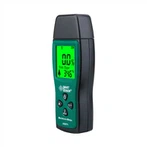
How do I use a multimeter to check if there is a cable short-circuit or if the cable is to earth?
If you want to check the line for shorts. Firstly, you have to de-energise the line, then pull the individual load switches apart and use the ohm stop of your multimeter for the resistance between the two two wires. Under normal circumstances, the higher the resistance, the better. If you judge whether the line is grounded or not, you can use the ohm stop of the multimeter. To measure the resistance of each wire to ground. Also the larger the better. It should be noted that the use of a multimeter to measure the line with or without a short circuit and grounding is not accurate. Should not be, if the ground or short circuit resistance is very small, then the multimeter can be detected, if the resistance is slightly larger. Multimeter is not checked, in the 380V low voltage circuit. Should be measured with a 500V swing meter, whether between the lines or to ground. Should be above 0.38 megohm. Otherwise it is unqualified.
First of all, you need to separate the fire line and zero line.
Ground: Turn the multimeter to the AC voltage gear, and the gear is higher than 220 V. Insert the red pen into the voltage hole, the black pen is not inserted, and then use the red pen to insert into one of the jacks of the socket and observe the reading.
The largest reading is for the firewire, smaller readings for the zero line, readings basically did not move for the ground line.
If there are 2 readings of small, a reading of large that the earth wire is not grounded, the earth wire is also connected to the zero wire. The second step behind does not need to be measured.
Multimeter to "short circuit" test function, (if not you can play to the resistance test), the red and black pens were connected to the circuit of the ground and utility ground, if the test results for the short circuit, or resistance is very small, the line is grounded, and vice versa, there is not.
To check for leakage and grounding, hit the multimeter on 200M. For example, to measure the insulation of equipment, connect one end of the meter pen to the equipment housing or ground, and the other end of the meter pen to the line. When measuring insulation, the hand should not touch the pen to prevent causing measurement errors.
Multimeter resistance gear to 20K or 200K, turn off the main power supply and load power, with a multimeter pen connected to the firewire, a pen ground line, see the resistance value, and then a pen connected to the zero line, a pen ground line, watch the two resistance situation, if there is a time to appear more than 7.3, or more than 14.1, indicating that there is resistance value of that time connected to the firewire or zero line leakage.
Many electricians will tell you, disconnect all the power supply, with the smallest resistance file (or diode file) to measure the resistance between the two lines to see if it is close to 0 ohms (or diode file shows 0), if close to 0, you can basically judge the two wires are shorted together, the same line to the ground to see if it's the same condition, if it is to prove that the line is grounded, this method is certainly Feasible, just in practice, many places are not convenient to power off, if the power is not measured, feasible?