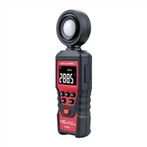
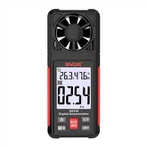
Infrared thermal imagers will continue to develop in the direction of large-scale focal planes (that is, thermal imagers); in terms of detection wavelengths, they will develop from monochromatic to two-color and multi-color; with the development of technology, infrared thermal imagers are an advanced technology. The temperature measurement equipment is more and more applied to various fields.
The working principle of infrared thermal imager
Infrared thermal imager (thermal imager or infrared thermal imager) detects infrared energy (heat) through non-contact, and converts it into electrical signals, and then generates thermal images and temperature values on the display, and can conduct temperature value analysis. A detection device for computing. Infrared thermal imaging cameras (thermal imagers or thermal imaging cameras) are able to precisely quantify, or measure, the amount of heat detected, allowing you to not only observe thermal images, but also accurately identify and rigorously analyze hot fault areas.
Currently, only forward-looking infrared thermal imagers are capable of producing high-quality images. It does not need to rely on starlight and moonlight, but uses the differential imaging of the thermal radiation of the object. The bright part of the screen means the temperature is high, and the dark part means the temperature is low. A thermal imager with good performance can reflect the temperature difference of one thousandth of a degree, so it can detect vehicles, people and even buried objects hidden in the woods and grass through smoke, rain and snow and camouflage. The visible distance of a modern rifle thermal imager is about 1000 meters. Some tank thermal sights can be seen up to 3000 meters away.