How metallographic microscopes differ from stereomicroscopes
Sound card rack and zoom organization
1. The sound card rack of a metallographic microscope is generally very large, but because metallographic microscopes are used for high-power testing, they can place samples with relatively small specifications. It is generally stipulated that the surface of the sample is relatively flat, and it must be prepared, polished, polished, and etched. In this regard, in addition to the metallographic microscope, although sample preparation is also necessary, it has almost no limit on the size of the sample. A good metallographic microscope can place more than 10kg of samples. In addition, the zoom structure of the upright metallographic microscope is used to adjust the goniometer (and there are also very few upright optical microscopes and measuring microscopes that use unique accessories to adjust the objective), and reversing the metallographic zoom structure is used to adjust the objective
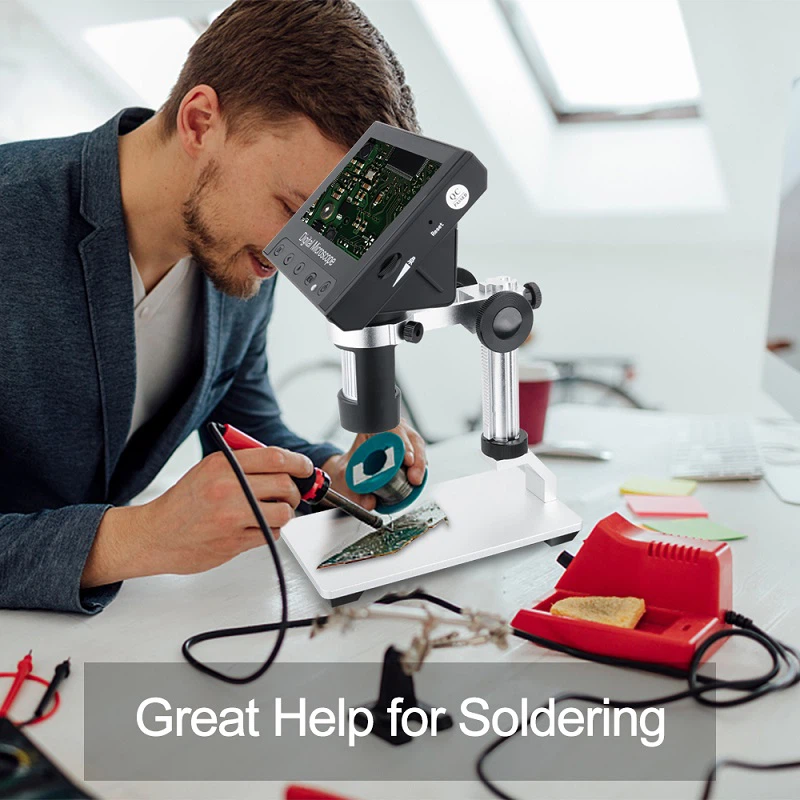
2. The sound card frame of a stereo microscope is generally smaller in size, but if it is moved with a large capacity, it can inspect samples of different sizes, including products from the production line immediately. Therefore, it has very low requirements for samples and does not require professional sample preparation. Only the surface of the sample preparation is about flat. Due to the relatively light weight of the rearview mirror, the zoom method of the stereo microscope is generally to adjust all the optical path servers.
Body type optical microscope
1. The magnification of the objective of a metallographic microscope is above 1.25 times and below 100 times, while the magnification of the objective is between 10X and 20X. Therefore, the total magnification of a metallographic microscope is between 12.5X and 2000 times.
2. The magnification difference of stereo microscopes is quite large. If it is a general detection stereo microscope, the magnification is generally between 0.5 and 100 times. If it is a scientific research level optical microscope, while improving the electronic optical quality, the magnification will also increase to around 200 to 400 times.
Lighting path system software
1. Metallographic microscopes generally use a professional refracted light illumination path (as the observed sample is not fully transparent), and the illumination light is irradiated onto the surface of the sample through the objective lens after passing through a semi reflective double light lens. After returning home, the reflection surface is imaged in three dimensions in the human eye through the objective lens and eyepiece. Therefore, the objective lens replaces the function of the spotlight in the Jiumu lighting system software. From a fundamental perspective, this type of lighting belongs to coaxial lighting, where both illuminated and refracted light are in the same main path.
2. Stereoscopic microscopes generally use external light sources, such as side halogen headlights for scattered illumination and circular LED lights for illumination. However, these lighting methods are not coaxial lighting, and their illumination light is scattered on the side at a certain angle with the main optical axis. The basic principle is similar to the dark field illumination of metallographic microscopes. In addition, some stereo microscopes also have coaxial lighting sources, but the coaxial lighting of the rearview mirror has certain limitations. If the design scheme is not reasonable, it will cause glare, which must be removed with unique accessories or glasses.