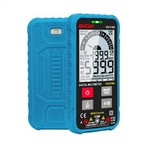
How often should the toxic and harmful gas detector be inspected?
Toxic and harmful gas detectors are important tools for safeguarding people's lives and environmental protection, and are widely used in various fields such as industry, healthcare, and laboratories. However, in order to ensure their accuracy and reliability, regular inspections and calibrations are of vital importance. So, below, Lanyue Measurement and Control will explain how often toxic and harmful gas detectors should be inspected and what their inspection cycles are.
First of all, we need to understand the routine inspection requirements of toxic and harmful gas detectors. Generally speaking, such detectors should be subject to at least one daily inspection. The content of the daily inspection includes checking whether various functions of the instrument, such as the power supply, sensor, display screen, and alarm, are normal. In addition, it is also necessary to check whether the calibration date of the instrument and the calibration gas have expired. These daily inspections can ensure the normal operation of the instrument during daily use, and promptly detect and solve potential problems.
In addition to daily inspections, toxic and harmful gas detectors also need to undergo regular inspections. The purpose of regular inspections is to check whether the accuracy and sensitivity of the instrument meet the requirements. The regular inspection cycle is generally half a year or one year, but the specific cycle may vary depending on the type of the instrument, the usage environment, and the detection requirements.
It is worth noting that for some high-risk scenarios, there may be fixed-time verification standards for the measuring equipment put into use on-site. Therefore, in these situations, the inspection cycle of toxic and harmful gas detectors may be more stringent. In addition, operators should also strictly follow the operation steps provided by the gas detector manufacturer for maintenance operations when using the instrument, and avoid disassembling and assembling it privately to prevent affecting the performance and accuracy of the instrument.
The inspection cycle of toxic and harmful gas detectors should be determined according to their type, usage environment, and detection requirements. Daily inspections can ensure the normal operation of the instrument, while regular inspections can ensure the accuracy and reliability of the instrument. Through scientific inspections and maintenance, we can better safeguard people's lives and environmental protection.