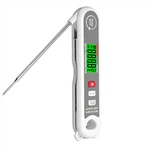
How should wood moisture content be measured?
Charcoal moisture content detector, charcoal moisture content tester, charcoal moisture content meter, charcoal moisture tester, charcoal moisture meter, the measurement principle is the oven drying weight loss method. Percentage, to calculate the moisture content of charcoal (moisture content percentage). The design and manufacture of the charcoal moisture meter follows the test method requirements for the determination of total moisture by drying method in GB/T 17664-1999 "Test Methods for Charcoal and Charcoal".
The total moisture of charcoal refers to the total amount of moisture contained in the charcoal sample at the time of sampling. Dry the sample at 102°C to 105°C, and after drying to constant weight, take the lost mass as a percentage of the original mass of the sample as the total moisture. Therefore, the total moisture of charcoal is also called moisture content, moisture content percentage, moisture content percentage, etc.
The dry method charcoal moisture tester has a wide range of applications and is suitable for almost all industries that need to measure the moisture content of materials. Commonly used in sawdust, shavings, wood powder, wood chips, rice husk, wood, fruit shell, peanut shell, coconut shell, bamboo powder, bamboo chips, peanut skin, sunflower seed shell, furfural residue, soybean meal, wine residue, bagasse, coffee Determination of moisture content in shells, crop straws, wood activated carbon, bamboo charcoal, coke, carbon black, coal, blue charcoal, machine-made charcoal, bamboo chips and other materials.
Charcoal Moisture Standard According to the source of raw materials, charcoal can be divided into three types: hard broad-leaf charcoal, broad-leaf charcoal, and pine charcoal. Among them, the moisture content of hard broad-leaved charcoal should be controlled within 7-10%; the moisture content of broad-leaved charcoal should be controlled between 7-12%; the moisture content of pine charcoal should be controlled within 7-12%.
How to use the charcoal moisture content detector
After unpacking the device and simply completing the device installation, complete the calibration according to the instrument manual. After zeroing, in the state of 0.000g, take about 3g of charcoal powder sample and place it in the sample tray, cover the heating chamber cover, select start, and start the heating test. When the measurement is over, the instrument will automatically lock and display the moisture content of the sample . The entire measurement process is easy to operate and does not require manual calculations. The test results are in good agreement with the results calculated by oven drying weighing. The accuracy is high and the measurement speed is fast. It meets the needs of the rapid development of modern enterprises. It is a multi-industry rapid detection of raw materials, Good choice of product moisture content.
The significance of detecting the moisture content of charcoal
Charcoal can be divided into fired charcoal and machine-made charcoal according to the production method. The raw material moisture requirements for firing charcoal are not as high as those for machine-made charcoal. Burning charcoal belongs to direct molding, while machine-made charcoal needs to be pressed into shape. The molding process of machine-made charcoal has relatively strict requirements on the moisture content of materials. The moisture content directly affects the quality of charcoal. When using a charcoal machine for charcoal production, it is necessary to control the moisture content of raw materials between 5% and 12%. When the moisture content of the machine-made carbon raw material is lower than 5%, the conversion and viscosity of the raw material are poor, resulting in the problem that the rod is not knotted; and if the moisture content of the raw material is greater than 12%, the rod will be soft and easy to bend, and the density is low . Therefore, the charcoal making process generally requires the combination of a charcoal machine and a dryer and other equipment. Only under the synergistic effect can good charcoal be made.