How to Adjust Stereo Microscope Magnification for Different Observation Requirements
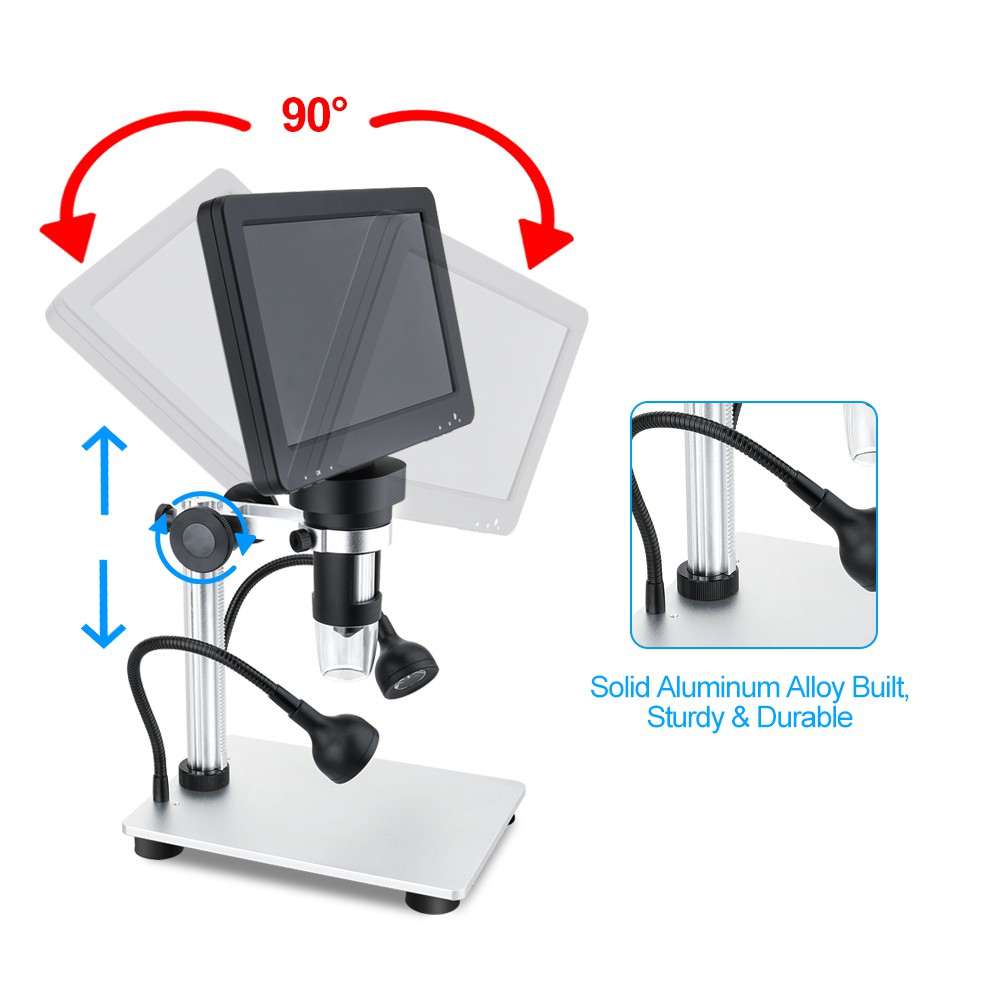
Stereo microscopes are used for three-dimensional inspection and observation of electronic components, integrated circuit boards, rotary tools, magnets, and similar items. Since these different test objects require observation at various magnifications, how can we meet these diverse requirements? This can be addressed through several approaches:a. optical performance, b. video observation, c. mechanical performance, d. illumination.
Optical performance:Based on the observation requirements of the test object, issues such as high magnification and wide field of view can be resolved by selecting different eyepieces and objectives. When only high magnification is needed, higher-power eyepieces and objectives can be installed. For a wider field of view, the objective can be replaced, the eyepiece power reduced, or wide-field eyepieces used.
Video observation:When optical magnification is insufficient, electronic magnification can be used for compensation. Video observation is also suitable when real-time viewing and image storage are required. Video solutions include:A. direct connection to a monitor;B. connection to a computer via a digital CCD or analog CCD image capture card;C. connection to a digital camera (compatibility with the microscope and different interfaces must be considered for various cameras).
Mechanical performance:For applications such as welding, assembly, inspection of large integrated circuit boards, and scenarios requiring specific working distances, mechanical solutions can be adopted, such as universal stands, rocker-arm brackets, and large movable stages. These structures allow inspection of large objects without moving the sample itself. For example, a company with large, difficult-to-move circuit boards that require fine oblique observation can fully meet these needs using a universal stand.
Illumination:Lighting plays a critical role in clearly visualizing the test object. When choosing illumination, select appropriate lighting equipment and lighting methods based on the characteristics of the object, including its sensitivity to light intensity, reflectivity, and other factors. If the standard transmitted and oblique illumination provided by conventional stereo microscopes is inadequate, optional lighting is available, including LED cold light sources, ring lights, and single/dual-branch fiber optic cold light lamps.