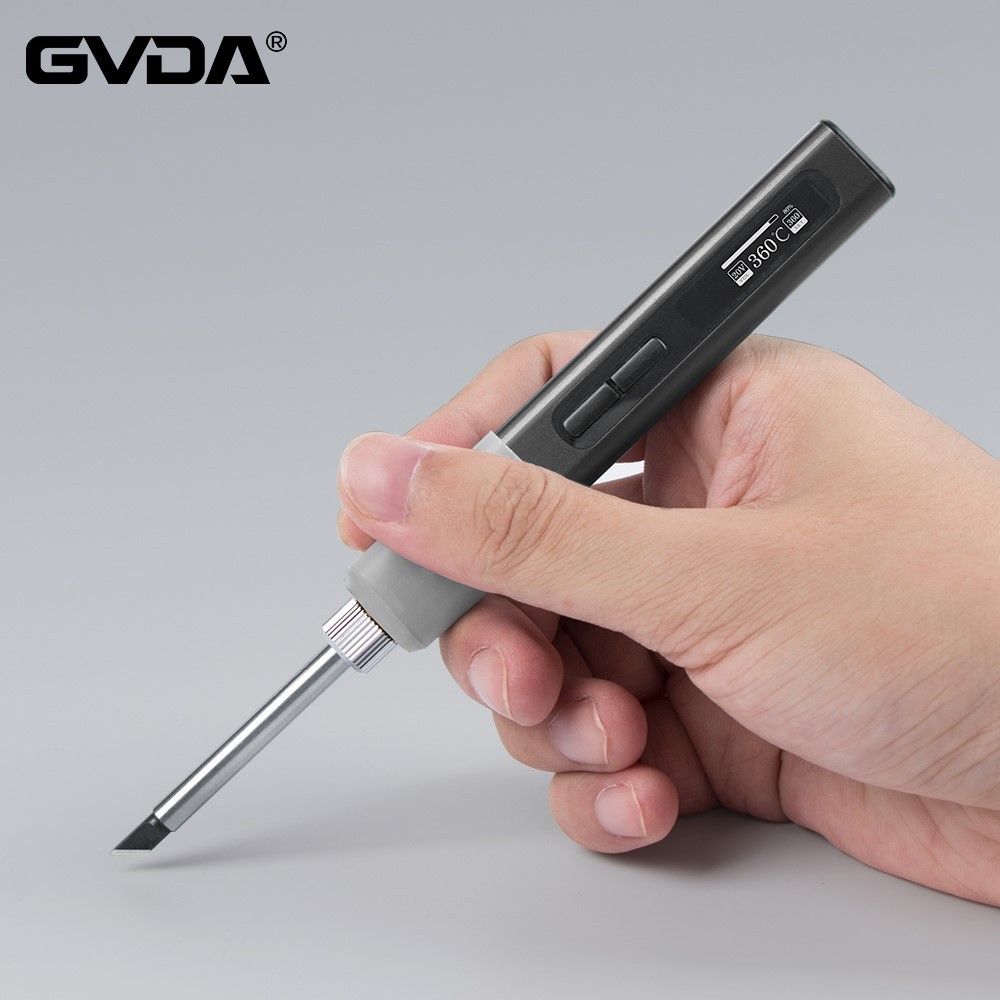
How to control the welding temperature of an electric soldering iron?
1. Choose the appropriate welding temperature
Select the appropriate welding temperature based on the type, characteristics, thickness, and shape of the welding material, as well as the welding environment and equipment performance. Generally speaking, the welding temperature of tin lead solder is between 300-350 ℃, and the welding temperature of silver solder is between 700-800 ℃.
2. Use a temperature controller
To ensure the stability and accuracy of the welding temperature, a temperature controller can be used to control the temperature of the soldering iron. The temperature controller can monitor and adjust the temperature of the soldering iron in real time, ensuring a constant temperature during the welding process.
3. Preheat welding materials
Before welding, the welding material can be preheated to a temperature close to the welding temperature. This can reduce temperature fluctuations during the welding process and improve welding quality.
4. Control welding speed
During the welding process, the welding speed should be controlled to avoid being too fast or too slow. Excessive welding speed may result in incomplete melting and flow of solder, while excessively slow welding speed may lead to oxidation and moisture absorption of solder.
5. Maintain the stability of the welding environment
During the welding process, the temperature and humidity of the welding environment should be kept stable to avoid fluctuations in welding temperature caused by environmental changes.
6. Regularly inspect and maintain welding equipment
To ensure the performance and stability of welding equipment, regular inspections and maintenance should be carried out, such as cleaning the soldering iron tips, replacing worn soldering iron tips, checking the power cord and temperature controller, etc.