How to measure the resistance between the coils of a three-phase motor using a multimeter's resistance range
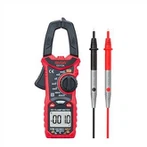
The phase resistance of the motor cannot be measured with a megger because the voltage of the megger is too high, which may break through the insulation of the coil. Usually, we use a multimeter to measure the resistance between the coils of a three-phase motor. Whether it is a star connection or an angle connection, the resistance between the three phase windings should be very small, and the windings are normal.
However, it should be noted that the three-phase windings are actually integrated. Except for motors with smaller power that are internally connected in a star or triangle shape, high-power motors require connection plates for connection or use star delta voltage reduction control wiring. If the connection plates are removed, the resistance between the three-phase windings should be greater than one megaohm.
So, when measuring the resistance value of the three-phase winding, we must remove the connecting piece in order to obtain accurate data.
The insulation of three-phase winding to ground can be measured using a megohmmeter, which is usually infinite and should be at least greater than 0.5 megohms. The larger the motor, the higher the insulation resistance requirement. For a 45 kW motor, the insulation resistance should be more than one megohm.
The insulation to ground mentioned here refers to the connection between the winding and the motor body, rather than the insulation to the ground wire or ground. So when we measure, we only need to measure the resistance of the winding and the body.