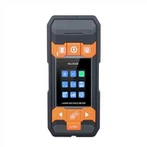
How to prepare pH meter electrode protective solution
The chemical name for pH electrode protective solution potassium chloride is KCL, with a molecular weight of 74.551. It is a white crystalline or crystalline powder. It has a bitter and salty taste. Moisture absorbing, sealed and stored dry. One liter=1000 milliliters (1000mL) of 3mol/L potassium chloride solution - that is to say, each liter of the solution contains 3 moles of potassium chloride. Moles are the stoichiometric units, and the mass of each mole of substance is equal to its relative molecular mass. 3mol/L KCl is approximately 223.5g KCl per liter.
Quick configuration of pH meter | Acidity meter protective solution -3mol/L KCl solution development steps instructions:
1. Calculation: If the molar mass of KCl is 74.5g/mol, then KCl mass=3mol × 74.5g/mol=223.5g;
2. Weighing: Use an analytical balance to weigh 223.5g of KCl, and pay attention to the use of the analytical balance;
3. Dissolve: Dissolve completely in 100ml of distilled water in a beaker and stir with a glass rod;
4. Transfer and wash: Transfer the dissolved solution into a 1000ml volumetric flask, using a flask with a thinner opening;
Attention: To prevent the solution from spilling out and not to let the solution flow down the bottle wall above the scale line, use a glass rod to drain the water. To ensure that all solutes are transferred to the volumetric flask as much as possible, the beaker and glass rod should be washed with distilled water two or three times, and the solution after each wash should be injected into the volumetric flask. Gently shake the volumetric flask to thoroughly mix the solution; (Use a glass rod for drainage)
5. Constant volume: When adding water to a depth of 2-3 centimeters close to the mark, use a rubber dropper to add distilled water to the mark. This operation is called constant volume. When setting the volume, it is important to note that the lowest point of the concave liquid surface of the solution is tangent to the scale line, and the line of sight of the eyes is horizontal to the scale line. Do not look down or up, otherwise it will cause errors;
6. Shake well: If the concentration of the solution is uneven after reaching a certain volume, the stopper of the volumetric flask should be tightly sealed. Use your index finger to hold the stopper, and use the fingers of your other hand to hold the bottom of the flask. Invert and shake the volumetric flask multiple times to mix the solution evenly. This operation is called shaking evenly;
7. Shake the KCl solution to a constant volume. Pour the prepared solution into a reagent bottle, cap the bottle with a stopper, and label it. This produces a 3mol/L KCl solution.
To soak the electrode with potassium chloride, a saturated solution is sufficient. The simplest method is to add some distilled water (such as 100g or 100ml) to a beaker, and stir while adding potassium chloride until it can no longer dissolve. This is considered saturated. The concentration of potassium chloride used to soak the electrode is 3mol/L. According to conversion, there are 223.5 grams of potassium chloride in a 1000 mg solution.