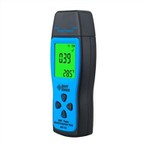
How to Properly Select Portable Gas Detectors
① When methane and other low-toxicity alkanes are the predominant gases, an LEL detector is undoubtedly the optimal choice. Flammable gas detectors operate on the catalytic combustion principle, which is a widely adopted detection technology. Calibration of such instruments is also straightforward. Thanks to the mature technology, domestically manufactured gas detectors are fully capable of meeting user requirements.
Below are well-received domestic and imported portable flammable gas alarms recommended by users: Domestic Recommendations: JL268D, JL269 leak detector, ADY-1, and HL-200 series have received favorable user feedback.
Imported Recommendations:
MC-W flammable gas detector by BW Technologies (Canada)
Impulse X1 detector by Honeywell
XP-3110 detector, XP-3160 pumped alarm and XP-3140 leak detector by New Cosmos Electric
miniEX flammable gas detector by RAE Systems
EX2000 detector by Oldham
PAC EX2 and X-am 2000 flammable gas detectors by Dräger
② If toxic gases such as carbon monoxide, hydrogen sulfide, ammonia, oxygen, hydrogen, phosphine and others are present, portable single toxic gas detectors or portable multi-gas detectors shall be prioritized to safeguard workers' safety. Toxic gas detectors adopt the electrochemical detection principle, with readings generally displayed in ppm.
Note: For detecting the above toxic gases, domestic instruments are acceptable only for carbon monoxide and oxygen. Imported devices are strongly recommended for all other toxic gases.
Imported Recommendations:
GAXT series single toxic gas detectors by BW Technologies
Impulse XP single-gas detectors by Honeywell
T40 detector by Industrial Scientific
TX2000 single-gas detectors by Oldham
Pac 5000, Pac 7000 and Pac III single toxic gas detectors by Dräger
③ For organic toxic and hazardous gases that can cause poisoning at low concentrations, including aromatic hydrocarbons, halogenated hydrocarbons, amines, ethers, alcohols, esters and similar substances, a photoionization detector (PID) must be selected. LEL detectors shall never be used as a substitute, as this may result in casualties.
Imported Recommendations:
PGM-7600, PGM-30, PGM-7320 and PGM-7240 detectors by RAE Systems
M5 detector by BW Technologies (Canada)
Organic vapor detectors by Ion Science (UK)
④ When the site involves all the above categories of gases, a compound multi-gas detector should be selected. It is necessary to clarify all gas components in the measured environment to configure the corresponding sensors accurately.