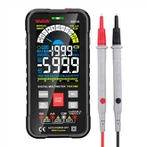
How to reset and debug coating thickness gauge QNIX4500
How to debug and reset the QNIX4500 coating thickness gauge? In order to reduce errors, the zero position should be taken as a reference on the substrate. It is recommended to use the same unpainted workpiece surface for zero adjustment, because the magnetic properties and electrical conductivity of materials are different, which will cause certain errors. If there is no unpainted workpiece, it can be zeroed with the attached zeroing board.
Use the instrument to measure the matrix, if the display is 0.0, it indicates that it is already at zero position and no zero adjustment is required. If 0.0 is not displayed, zero adjustment is required. Press the probe of the instrument on the zero adjustment plate or the surface of the unpainted workpiece, do not lift it up, press the red button on the instrument to release it, and after hearing the sound, the LCD displays a set of numbers, take the instrument away, and after hearing the sound again, LCD display 0.0, zeroing is completed.
How to debug and reset QNIX4500 coating thickness gauge
Stable zero position: All coating thickness gauges are required to calibrate the zero position before measurement, which can be calibrated on the zero calibration plate accompanying the instrument or on the uncoated workpiece. The stability of the zero position of the instrument is the premise to ensure accurate measurement. After a good thickness gauge is zeroed, it can keep the zero position without drifting for a long time to ensure accurate measurement.
No calibration required: In addition to zero calibration, most thickness gauges also need to be calibrated with standard sheets. To measure a certain range of thickness, it is necessary to use a certain range of standard sheets for calibration. The main reason is that it cannot meet the linear accuracy in the whole range. Not only is the operation cumbersome, but it will also fail due to the rough surface of the standard sheet, which will increase the system error.
Temperature Compensation: The measurement of coating thickness is greatly affected by temperature. The measurement of the same workpiece at different temperatures will give a large error. Therefore, a good thickness gauge should have ideal temperature compensation technology to ensure measurement accuracy at different temperatures.
Ruby probe: The wear resistance of the probe contact point directly affects the accuracy of the measurement. Ordinary metal contact probes will cause large errors after the surface is worn.