How to troubleshoot when a gas alarm activates but no leak source is found?
1. Gas alarm device body inspection
The sensor is the core of the instrument. Check its appearance for damage or corrosion, and replace it if necessary. Meanwhile, pay attention to the service life of sensors, as sensors that have exceeded their service life may lead to false alarms. In addition, check whether the alarm threshold and detection gas type settings of the instrument are correct, as incorrect settings can cause false alarms. Dust and impurities can affect the performance of the instrument. Clean the instrument with a soft cloth or compressed air, and calibrate it regularly with standard gas to ensure accurate measurements.
2. Inspection of Alarm Device Installation
Incorrect setting of alarm setpoints may also lead to false alarms. Adjust the alarm value according to actual needs and ensure that the sensor is well connected without damage or looseness. Confirm that the installation location meets the requirements and avoid installation in poorly ventilated, air prone dead corners, or environments with high temperature, high humidity, and strong electromagnetic interference. Adjust the installation height reasonably based on the detected gas density to ensure the detection effect.
3. Comprehensive inspection of the testing environment
Centered around the alarm, gradually expand the detection range, conduct detailed inspections of key areas such as pipelines, valves, and equipment interfaces, and pay attention to concealed locations. Based on the diffusion characteristics of gases and meteorological conditions such as wind direction and speed, analyze the possible diffusion directions of gases and focus on detecting them along the corresponding paths. Do not ignore adjacent areas, as gases may enter the detection area through ventilation systems, etc.
4. Using auxiliary detection methods
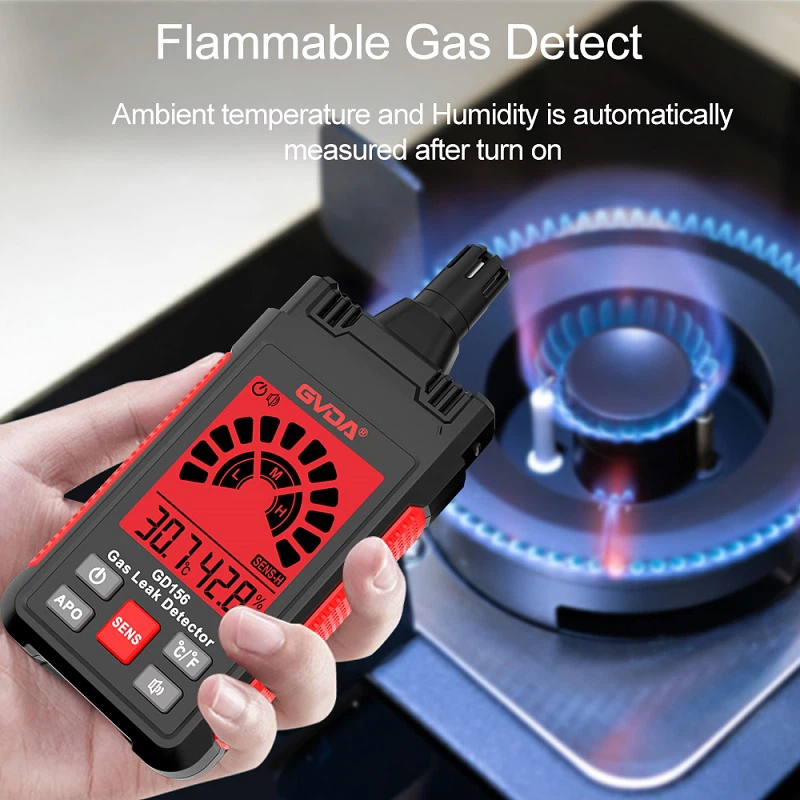
The portable gas detector has high flexibility and can accurately detect at different positions. Apply soapy water to pipelines and valves. If there is a leak, soap bubbles will be produced. When conditions permit, professional equipment such as infrared imaging devices can be used to quickly locate leakage sources that are difficult to detect with the naked eye.