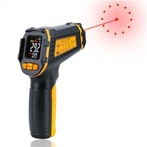
How to use a multimeter to check the remaining battery power
A multimeter can not only be used to measure the resistance of the object being measured, but also to measure AC and DC voltage. Some multimeters can even measure the main parameters of transistors and the capacitance of capacitors. Fully mastering the use of a multimeter is one of the most basic skills in electronic technology. Common multimeter types include pointer type multimeter and digital multimeter. A pointer type multimeter is a multifunctional measuring instrument with a meter head as the core component, and the measured value is read by the pointer of the meter head. The measured values of a digital multimeter are directly displayed in digital form on the LCD screen, making it easy to read. Some also have voice prompts. A multimeter is a common meter that integrates a voltmeter, ammeter, and ohmmeter.
The DC current range of a multimeter is a multi range DC voltmeter. The parallel connection of the meter head with a closed circuit voltage divider resistor can expand its voltage range. The DC voltage range of a multimeter is a multi range DC voltmeter. The voltage range can be expanded by connecting the meter head in series with a voltage divider resistor. The corresponding range varies depending on the voltage divider resistance. The head of the multimeter is a magnetoelectric measuring mechanism, which can only measure AC power through DC, using diodes to convert AC into DC.
Multimeter
The basic principle of a multimeter is to use a sensitive magnetoelectric direct current meter (microampere meter) as the meter head. When a small current passes through the meter head, there will be a current indication. But the meter head cannot pass through large currents, so it is necessary to shunt or reduce voltage by connecting some resistors in parallel or series on the meter head, in order to measure the current, voltage, and resistance in the circuit.
The measurement process of a digital multimeter is converted into a DC voltage signal by a conversion circuit. Then, the analog to digital (A/D) converter converts the voltage into a digital quantity, which is counted by an electronic counter. Finally, the measurement results are directly displayed in digital on the display screen.
The function of measuring voltage, current, and resistance with a multimeter is achieved through the conversion circuit, and the measurement of current and resistance is based on voltage measurement. This means that a digital multimeter is an extension of a digital DC voltmeter.
The A/D converter of a digital DC voltmeter converts the analog voltage that continuously changes over time into a digital quantity. The digital quantity is then counted by an electronic counter to obtain the measurement result, which is then displayed by a decoding display circuit. The coordination work of the logic control circuit controls the entire measurement process in sequence under the action of the clock.