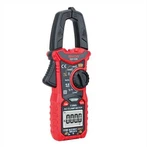
How to use a multimeter to determine whether a temperature sensor is good or bad?
The temperature sensors used in electric water heaters mainly include thermistor temperature sensors and platinum resistance temperature sensors. Both of them output resistance signals to the secondary instrument, the temperature controller. Among them, the thermistors commonly used in electric water heaters are negative temperature coefficient (NTC) thermistor temperature sensors. As the temperature rises, their output resistance values decrease. While for platinum resistance thermometers, as the temperature increases, their output resistance values increase.
Using a Multimeter to Determine the Quality of an NTC Thermistor
Place the temperature sensor of the water heater at room temperature. Connect the two probes of the digital multimeter to the two pins of the thermistor respectively, and measure its actual resistance value. Then compare the measured actual resistance value with the nominal resistance value. If the difference between the actual resistance value and the nominal resistance value is within ±2 ohms, it is considered normal. Otherwise, the performance of the thermistor temperature sensor deteriorates or it is even damaged. You can also conduct a heating test on the thermistor. Heat it with a lighter. If the resistance value measured by the multimeter decreases as the temperature rises, it indicates that the thermistor temperature sensor is normal. If the resistance value does not change, it means that the thermistor temperature sensor is damaged.
Using a Multimeter to Determine the Quality of a Platinum Resistance Temperature Sensor
Since the platinum resistance temperature sensor has three lead wires, find the one with a different color. Connect one probe of the multimeter to it and keep it still. Use the other probe to connect to the other two lead wires respectively. Measure the resistance values. If, after measuring pairwise, you find that the resistance value is infinite or lower than 100 ohms, it indicates that the platinum resistance thermometer is damaged. If the resistance values are different after pairwise measurement, it means that there is a problem with the compensation wire or the lead wires of the platinum resistance thermometer. At the same time, you can manually heat the platinum resistance thermometer. If the resistance value does not change, it indicates that the platinum resistance thermometer is damaged. If the measured actual resistance value differs greatly from the nominal resistance value, it shows that the performance of the platinum resistance thermometer is deteriorating.
Therefore, for the normal temperature control of an electric water heater, its temperature sensor is of vital importance. If the temperature sensor malfunctions, the temperature controller of the electric water heater will not be able to receive the resistance signal transmitted by the temperature sensor, and then the temperature control system will fail. No matter how the temperature setting value is set, it will not be able to play a controlling role. Because in a closed-loop control system, there are four links. The damage of the temperature sensor is in the detection and transmission link. So if there is a problem with the detection instrument in this link, the temperature controller will not be able to function properly.
A temperature sensor is a variable resistor controlled by temperature, and it can be measured with a 100K resistance range. If it is a negative temperature coefficient sensor, when heating the sensor to raise its temperature, the resistance value shows a downward trend. If it is completely open-circuited, there is no need to measure it, as it is definitely damaged. If the temperature of the temperature-sensing part of the sensor changes but the resistance value of the sensor does not change, then there is also a problem!