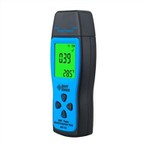
How to use a multimeter to measure whether components are good or bad and whether the circuit is working properly
1. Inductance type, such as the 220V end of a power transformer with a wattage of 1W to 500W, the DC resistance is generally between several K Ω and several tens of Ω, and the higher the wattage, the lower the resistance. The coil resistance of the electromagnetic relay is roughly within this range; In addition, the transformers used in switch mode power supplies have relatively low DC resistance, generally ranging from a few tenths to several tens of ohms. The higher the power and frequency, the lower the DC resistance. And the DC resistance of small finished inductors is also within this range.
The common feature of inductance measurement is that the test results are the same regardless of whether it is measured forward, reverse, or using any gear of a pointer or digital meter.
2. Measurement of semiconductor devices: When measuring diodes, the forward resistance is generally between a few Ω and several hundred Ω, and the test results may vary depending on the meter and gear. And the reverse resistance will be very large, usually between several megabytes and ∞, but the germanium tube will be smaller, usually above several hundred K Ω. If using a pointer meter Rx10K to measure a diode with a voltage regulation value below 9V, it is normal for both the forward and reverse resistances to be very low. When measuring NPN or PNP transistors, b, c, and e can be understood as two diodes connected together, and can be measured using the above method. For meters with dedicated transistor gears, this gear can be used for direct measurement.
3. Measurement of capacitance
For digital meters, capacitance measurement can be directly used. If it is a pointer meter, capacitors above 100 μ F can be measured in Rx1 or R × 10 mode, and capacitors below 100 μ F can be measured in Rx1K or Rx10K mode. It is better for the pointer to return to the origin after swinging (the larger the capacity, the greater the swing), otherwise there will be leakage or exchanging the probe for retesting, because the leakage of electrolytic capacitors will increase when reverse voltage is applied. For capacitors that have just been removed from the circuit, they must be discharged and measured to prevent damage to the multimeter.
4. Rough measurement of integrated circuits
There should be a good integrated circuit as a reference for this. Compare and control the forward and reverse resistance of any two legs separately. If there is a significant difference in resistance between certain pins compared to a good integrated circuit, it can be preliminarily determined that the integrated circuit has been damaged.