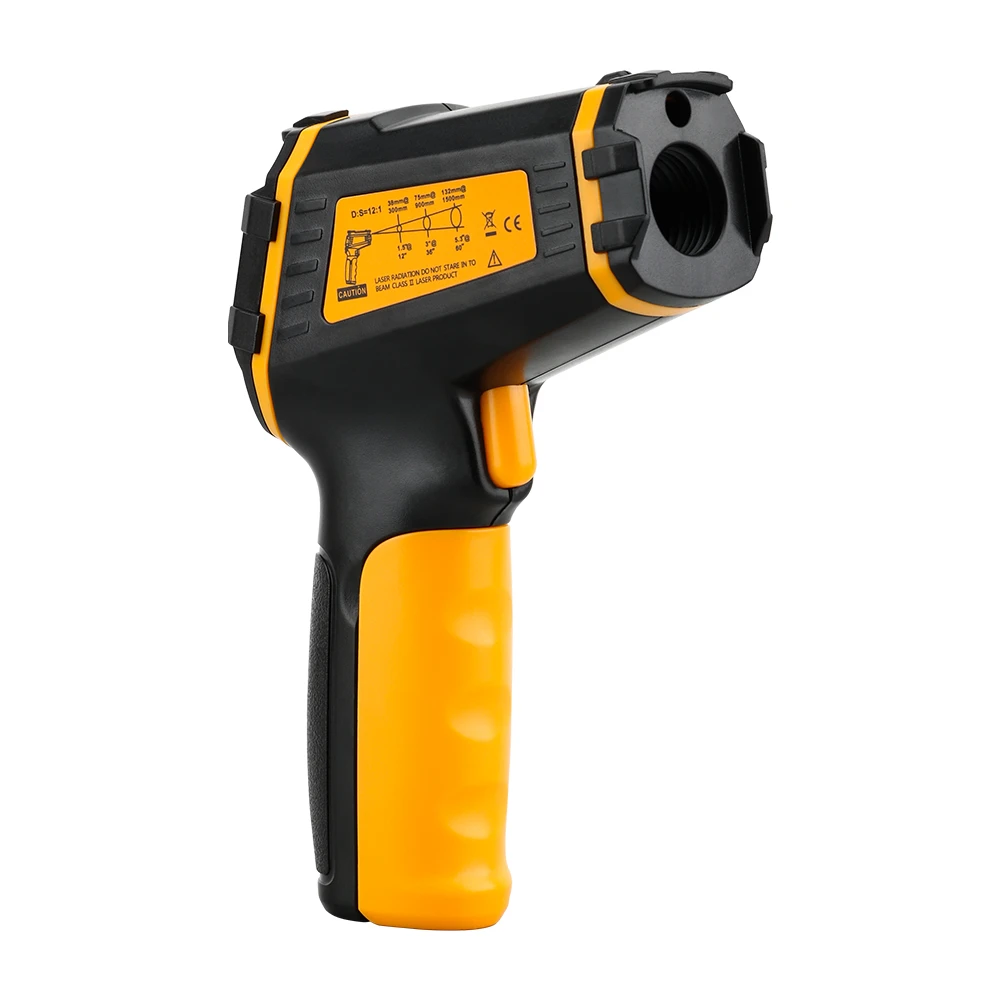
How to use an infrared thermometer correctly
Portable infrared thermometers should be quite widespread now, but how to use infrared thermometers correctly will be introduced one by one below:
When measuring the temperature of the object being measured with a portable infrared thermometer, the infrared thermometer should be aligned with the object to be measured, and the ratio of the measurement distance to the size of the light spot should meet the field of view requirements, not too close or too far. Then press the trigger button to read the measured temperature data on the instrument's LCD display screen. There are five important things to remember when using a portable infrared thermometer.
1. Environmental temperature. If the infrared thermometer is suddenly exposed to an environmental temperature difference of 20 ℃ or higher, the instrument is allowed to adjust to the new ambient temperature within 20 minutes.
2. Only measure the surface temperature of the object. Portable infrared thermometer cannot measure the internal temperature of objects
3. Pay attention to environmental conditions. Steam, dust, smoke, etc. can obstruct the optical system of the instrument and affect accurate temperature measurement.
4. Identify hotspots. To discover a hotspot, first aim the instrument at the target, and then scan up and down on the target until the hotspot is determined.
5. Portable infrared thermometers cannot measure temperature through glass. Glass has special reflection and transmission characteristics, which cannot accurately measure temperature readings, but it can be measured through an infrared window. Infrared thermometers are the most suitable for measuring temperature on bright or polished metal surfaces (such as stainless steel and aluminum).