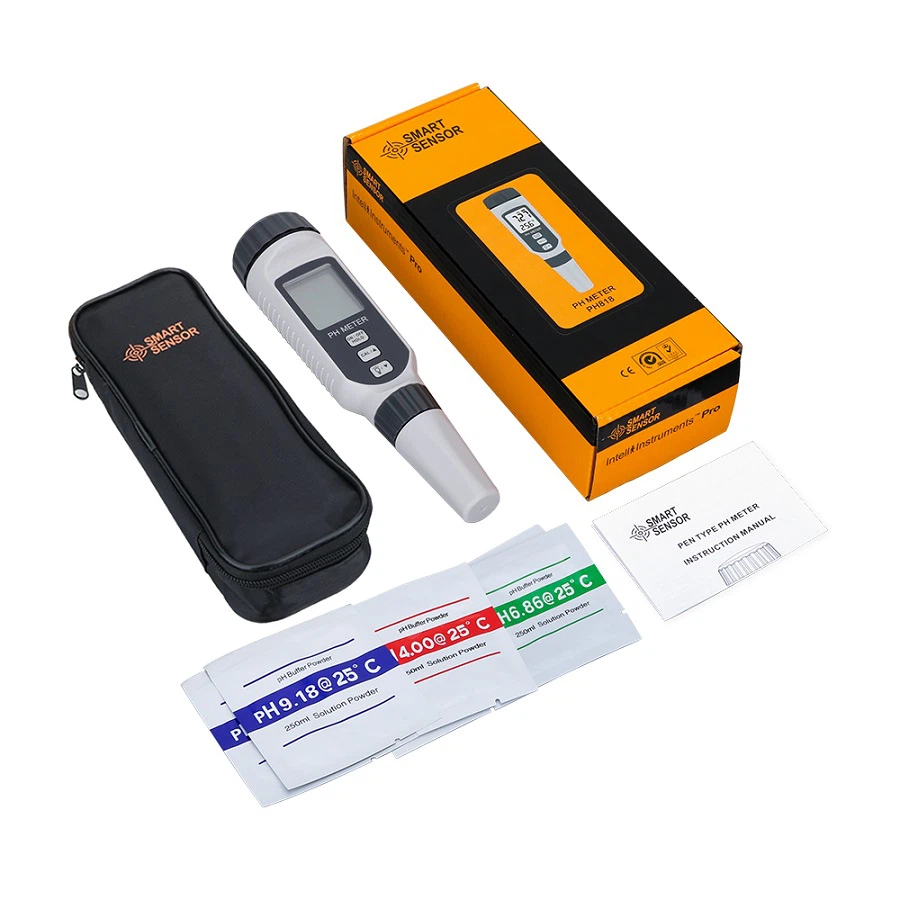
How to use and maintain pH meter electrodes
1. The electrode must be positioned and calibrated with a standard buffer solution of known pH value before measurement. The closer the pH value is to the measured pH value, the better.
2. After each calibration and measurement, the electrode should be fully cleaned with distilled or deionized water, and then cleaned with the test liquid before the next operation.
3. After removing the electrode sheath, avoid contact between the sensitive glass bulb of the electrode and hard objects, because any damage or scratches will render the electrode ineffective.
4. After the measurement, put on the electrode protective cover in time. A small amount of external reference supplementary liquid should be placed in the electrode cover to keep the electrode bulb moist. Do not soak it in distilled water.
5. The external reference supplementary liquid for the composite electrode is 3mol/L potassium chloride solution. The supplementary liquid can be added from the small hole on the upper end of the electrode. When the composite electrode is not in use, pull up the rubber sleeve to prevent the supplementary liquid from drying up.
6. The lead-out of the electrode must be kept clean and dry to prevent short circuit at both ends of the output, otherwise it will cause measurement inaccuracy or failure.
7. The electrode should be matched with a pH meter with high input impedance (≥1012Ω) to maintain good characteristics.
8. The electrode should avoid being immersed in distilled water, protein solution and acidic fluoride solution for a long time.
9. Avoid contact of the electrode with silicone oil.
10. After long-term use of the electrode, if the slope is found to be slightly reduced, the lower end of the electrode can be soaked in 4% HF (3~5) s, washed with distilled water, and then soaked in 0.1mol/L hydrochloric acid solution. It's new again.
11. If the measured solution contains substances that can easily contaminate the sensitive bulb or block the liquid junction and passivate the electrode, the slope will decrease and the display reading will be inaccurate. If this phenomenon occurs, the electrode should be cleaned with an appropriate solution according to the nature of the pollutant to refresh the electrode.