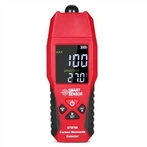
How to use the sugar meter in the beer production process
The beer production process can be divided into four processes: malting, saccharification, fermentation and packaging. Modern breweries generally no longer have a malt room, so the wheat production part will gradually be removed from the beer production process.
This sugar meter is suitable for different process installations in beer production. Using the principle of measuring the refractive index of the solution, the content of soluble solids can be determined. According to the different measurement requirements of each process, ms-1002 can be calibrated to measure the concentration of Plato, Brix, Balling and mass percentage.
1. In a mashing pot, malt and water are heated and boiled, while natural acids convert insoluble starches and proteins into a soluble malt extract called "wort". A sugar meter is usually installed in the outlet pipe of the sauce pot to manually monitor the wort concentration to keep the concentration stable and consistent. Under such working conditions, it is recommended to use compressed air or high-pressure water automatic prism cleaning device.
2. Before the wort is pumped into the boiling pot, the wort shell should be removed from the wort filter tank, and then the hops and sugar should be added. During this process, rinse with water, so that the concentration of wort will gradually decrease.
3. In the boiling pot, the wort is added with hops and boiled, the wort absorbs the taste of hops, emits the unique aroma and bitterness of beer, and reaches a certain concentration of wort. This process is critical to the quality of the beer. Without the bypass system, the concentration of wort can be monitored by using the sugar meter, and the concentration signal can be fed back to PLC or DCS for control. This is conducive to optimizing the boiling time, improving and stabilizing the beer quality. Under such working conditions, it is recommended to use compressed air or high-pressure water automatic prism cleaning device.
4. After the cyclotron boil, the hopped wort is pumped into the cyclotron to remove excess hop residue and insoluble protein.
5. After cooling, the cooler wort is added with yeast and pumped into the fermenter.
6. Fermentation tank In the fermentation tank, the yeast decomposes the sugar in the wort into alcohol and carbon dioxide. After about a week, "young beer" can be produced, and then matured after dozens of fermentations
7. After the filter is fermented, most of the yeasts settle at the bottom of the tank and need to be recycled and reused. The brewed "tender beer" is pumped into curing tanks. At this point, the remaining yeast and insoluble proteins are further precipitated, allowing the beer to mature gradually. The mature beer is filtered through a strainer to remove any remaining yeast and insoluble proteins to become packaged sake.
8. The wine outlet can also be installed with filling indexing online refractometer, which is used for online indexing of different kinds of beer or beer and CIP cleaning liquid. And output the signal to DCS, which is convenient for filling and switching of different varieties of beer, and reduces the loss of beer caused by CIP cleaning.