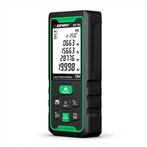
Infrared thermometer application range
Measuring Electrical Equipment
Non-contact infrared thermometers can measure the surface temperature of an object from a safe distance, making them an indispensable tool in electrical equipment maintenance operations.
Applications in electrical equipment
In the following applications, equipment failures and unplanned power outages can be prevented.
Connectors - Electrically connected parts can gradually relax connectors due to repeated heating (expansion) and cooling (contraction) generating heat, or surface dirt, carbon deposits and corrosion. Non-contact thermometers can quickly identify temperature rises that indicate serious problems.
Electric motors - To maintain motor life expectancy, check for consistent temperatures in power supply connections and circuit breakers (or fuses).
Motor bearings-Check for hot spots and regularly repair or replace them before they cause problems that lead to equipment failure.
Motor Coil Insulation-Extend the life of the motor coil insulation by measuring its temperature.
Measurement between phases-Check that the temperature of wires and connectors of induction motors, mainframe computers, and other equipment is the same from phase to phase.
Transformers-Windings of air-cooled devices can be measured directly with an infrared thermometer to check for excessive temperatures; any hot spots indicate damage to the transformer windings.
Uninterruptible Power Supplies - Determine the hot spots on the connecting wires on the UPS output filter. A low temperature point indicates that the DC filter line may be open.
Battery Backup-Check the low voltage battery to make sure it is properly connected. Poor contact with the battery connector may heat up enough to burn the battery mandrel.
Ballasts-Check for overheating of the ballast before it begins to smoke.
Utilities-Determine hot spots in connectors, wire splices, transformers, and other equipment. Some models of optical instruments have ranges of 60:1 or even greater, bringing almost any measurement target within range.