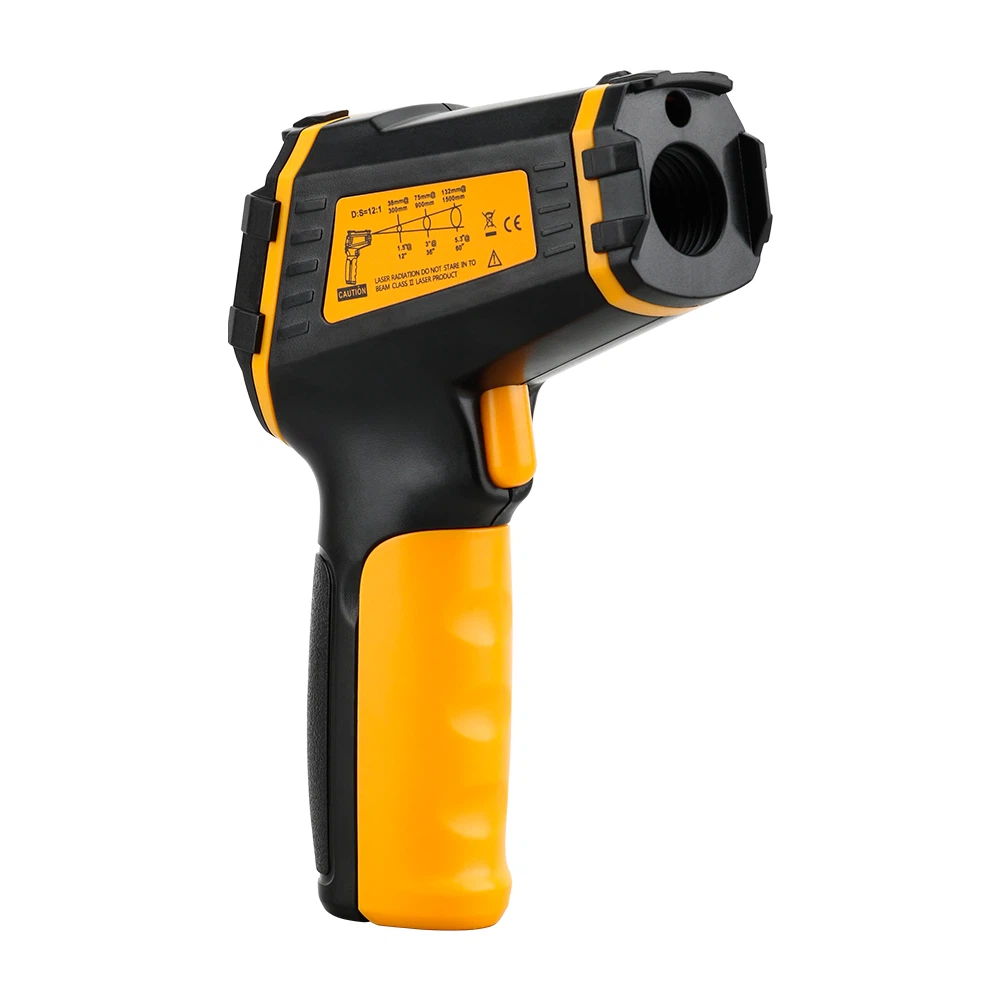
Infrared thermometer industry development trends
Fieldbus technology global automation technology has become a hot spot. Fieldbus is an open and fully digital, two-way, multi-station communication system used between field smart instruments and control rooms.
The emergence of fieldbus has provided huge power and development space for infrared thermometer upgrades, product upgrades, and further high precision, high performance (especially multi-parameter online real-time measurement and automatic measurement and control), high stability, high reliability, high adaptability, multi-function, and low power consumption.
The development of energy conservation, low-carbon economy, livelihood industry, and strategic emerging industries, restructuring and transformation have become the country's long-term national policies, and promote the rapid development of a number of emerging industries such as wind energy, nuclear energy, Internet of Things, smart grids, and high-speed railways and the railway transportation industry. The development of the infrared thermometer industry has brought new opportunities and markets.
Parker, former deputy director of Kunming Infrared Thermometer, Oval, said that the infrared thermometer industry in our country has entered a truly digital, intelligent and networked era. The report can help business owners or senior managers in the infrared thermometer market statistics, data analysis, development status, competitor intelligence and market development prospects, and is an important reference for companies to invest in infrared thermometers, infrared thermometer products, or conduct market research on existing infrared thermometers.
In the traditional infrared thermometer, the direction of the "six long" of high performance, high precision, high sensitivity, high stability, high feasibility and high environment and longevity will still be in the future.
The new infrared thermometers and components will be miniaturized, miniaturized, integrated, integrated, electronic, digital, multifunctional and intelligent, computer, integrated automation, optomechanical integration, service specialization, simplicity, family and personalization, no maintenance, assembly and production automation, cleaning (or ultra-clean), specialization, scale and direction of "20". In "20", the dominant core or key role is miniaturization, intelligence and networking.