Introduction to the historical development of laser rangefinders
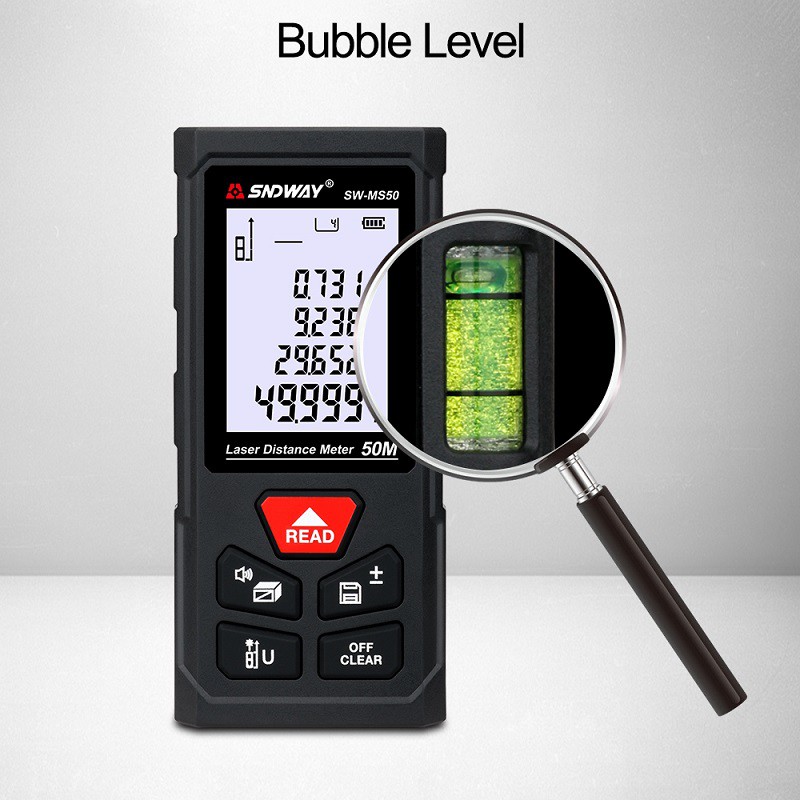
Laser rangefinder is an instrument that accurately measures the distance of a target using a certain parameter of modulated laser. Pulse laser rangefinder is a device that emits a short pulse laser beam or a sequence of short pulses towards a target during operation. The laser beam reflected by the target is received by a photoelectric element, and the timer measures the time from emission to reception of the laser beam, calculating the distance from the rangefinder to the target.
When the emitted laser beam power is sufficient, the measurement range can reach about 40 kilometers or even more, and the laser rangefinder can operate day and night. However, when there are substances with high laser absorption rate in space, the distance and accuracy of the rangefinder will decrease.
The world's first laser was the ruby laser developed by scientist Mayman from Hughes Aircraft Company in 1960. The US military quickly conducted research on military laser devices based on this foundation. In 1961, the first military laser rangefinder passed the US military's demonstration test, and after this, the laser rangefinder quickly entered the practical stage.
Due to the continuous decline in the price of laser rangefinders, they are gradually being used in industry. A batch of new types of micro rangefinders with advantages such as fast ranging, small size, and reliable performance have emerged both domestically and internationally, which can be widely used in industrial measurement and control, mines, ports, and other fields.
Laser is a new technology developed in the 1960s. It is a type of light with pure color, highly concentrated energy, and good directionality. Laser rangefinder is an instrument that uses laser for distance measurement. Its working principle is simple: measuring the distance by measuring the time from the start of laser emission to the reflection of laser from the target. For example, using a laser rangefinder to measure the distance of the moon, if the time from the start of laser emission to the reflection back from the moon is measured as 2.56 seconds, the one-way time from laser emission to the moon is equal to 1.28 seconds, and the speed of the laser is the speed of light, which is equal to 300000 kilometers per second. Therefore, the measured distance from the moon to Earth is the product of one-way time and the speed of light, which is 384000 kilometers. In order to emit and receive lasers and perform timing, the laser rangefinder consists of a laser transmitter, receiver, clock frequency oscillator, and distance counter.
Laser rangefinders can also be used for tracking and ranging artificial satellites, measuring aircraft flight heights, aiming and ranging targets, as well as conducting terrain surveying and surveying.