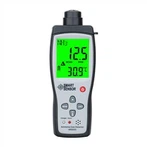
Introduction to the Usage and Fault Analysis of Sound Level Meters
The correct use of a sound level meter directly affects the accuracy of the measurement results. Therefore, it is necessary to introduce the use of sound level meters.
1. Precautions
Before use, you should read the instruction manual to understand the usage methods and precautions of the instrument.
Pay attention to polarity when installing batteries or external power sources, and do not connect them in reverse. If not in use for a long time, the battery should be removed to avoid liquid leakage and damage to the instrument.
Do not disassemble the microphone to prevent it from falling, and place it properly when not in use.
Instruments should be avoided from being placed in areas with high temperature, humidity, sewage, dust, and air or chemical gases containing high levels of hydrochloric acid and alkali.
Do not disassemble the instrument without authorization. If the instrument is abnormal, it can be sent to the repair unit or factory for maintenance.
2. Calibration of sensitivity
To ensure the accuracy of measurement, calibration should be carried out before and after use.
Match the sound level calibrator with the microphone, turn on the calibration power, read the value, adjust the sensitivity potentiometer of the sound level meter, and complete the calibration.
3. Measurement method
When measuring, the instrument should choose the correct gear according to the situation, hold both sides of the sound level meter with both hands flat, and point the microphone towards the measured sound source. Extension cables and rods can also be used to reduce the impact of the sound level meter's appearance and human body on the measurement. The position of the microphone should be determined according to relevant regulations.
2、 Analysis and Repair of Common Faults in Sound Level Meters
1. No display on the display
(1) Internal battery connection disconnected or poor battery contact: Solder the connection and replace the battery contact strip.
(2) Battery damage: Replace the battery.
2. The measurement reading is significantly low or cannot be calibrated to 94.0dB during calibration
(1) Microphone sensitivity too low or damaged: Replace the microphone and recalibrate.
(2) Poor contact between the contact point of the preamplifier and the microphone: cleaning the contact point
(3) Poor contact between the plug of the preamplifier and the host socket: replace the plug socket.
3. The reading is too high during low sound level measurement