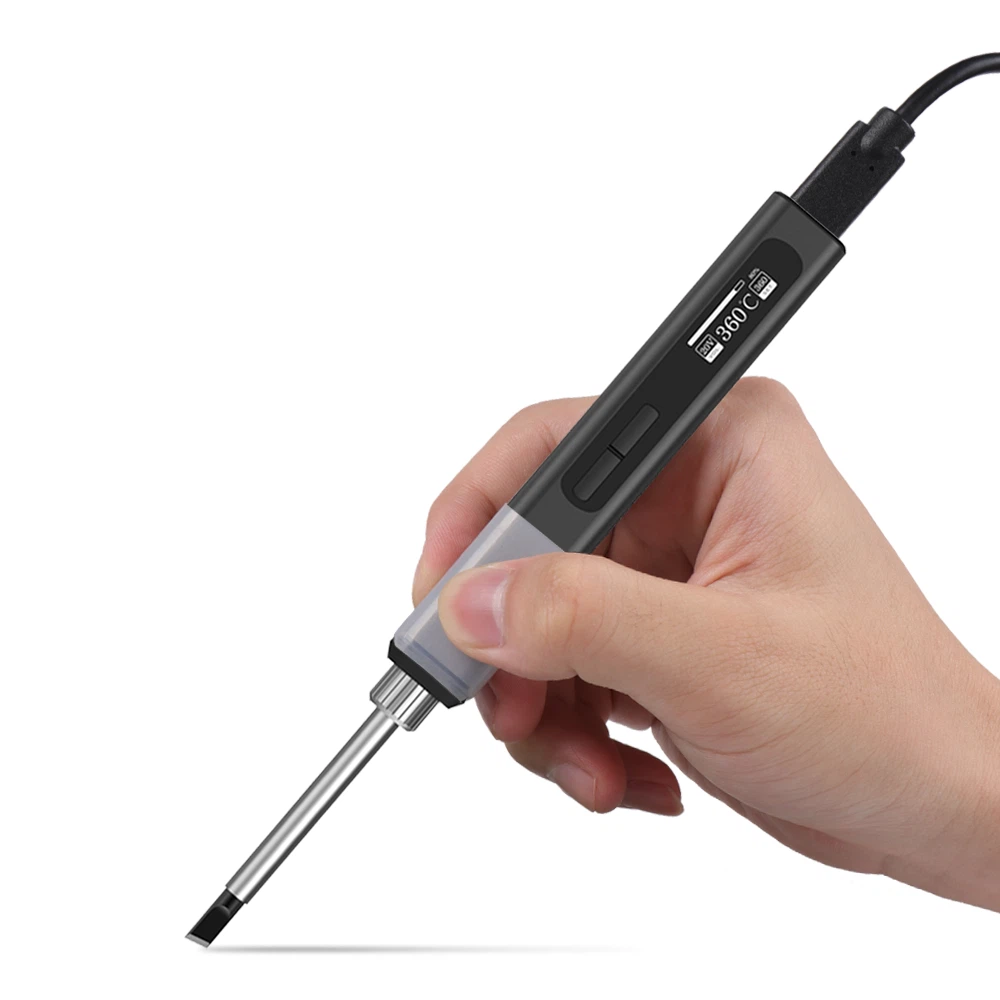
Is a high-power soldering iron better or a low-power one?
Electric irons come in a variety of power sizes; the smaller ones have wattages of 15 and 20; the larger ones have wattages of 200 and 300; and the 500 watt pistol-style irons. When welding, the soldering iron's power must be chosen based on the welding material, and occasionally the electric contact iron's power must be chosen based on the season (winter, summer). The recommended range for soldering electronic components is 15 to 20 watts. If you use 500 watts, the soldering iron will become a black hole once it shuts off. It is obviously not good.
The solder's flow and melting are the major factors that determine if the power is chosen correctly. It doesn't take more than three seconds to complete this. Electronic components will be harmed if it is too long, and if it is too short, reliable welding and smooth solder joints cannot be guaranteed.
Generally speaking, soldering irons with small feet should be used with components like resistors, capacitors, transistors, and integrated blocks. In the winter, the power level should be increased to 25 watts. When welding heat sinks, transformers, shielding coverings, and other large-footed equipment or grounding large-area copper-clad plates, it is best to utilize 35 to 40 watts of power. Therefore, the power of the soldering iron should be properly chosen based on the welding object. The terms "high power" and "low power" are nonexistent.