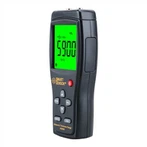
knowledge of how to use a coating thickness gauge
Coating thickness gauge generally has many types according to the measurement principle: magnetic thickness measurement method, eddy current thickness measurement method, ultrasonic thickness measurement method, electrolytic thickness measurement method, radiation thickness measurement method, the most widely used magnetic thickness measurement method and Eddy current thickness measurement method, because these two methods are simple and convenient to use, high accuracy, non-destructive, economical and affordable.
The magnetic coating thickness gauge applies the magnetic induction measurement technology method, which can non-destructively measure the thickness of the non-magnetic coating (such as aluminum, chromium, copper, enamel, etc.) on the magnetic metal substrate (such as steel, hardness iron, alloy and hard magnetic steel, etc.) , rubber, paint, etc.).
The eddy current coating thickness gauge uses eddy current measurement technology to non-destructively measure the thickness of non-conductive coatings (such as enamel, rubber, paint, plastic, etc.) on non-magnetic metal substrates (such as copper, aluminum, zinc, tin, etc.).
These two methods can be combined to form a magnetic eddy current dual-purpose coating thickness gauge, which has more powerful and complete functions, and is much more cost-effective than a single-purpose coating thickness gauge. Widely used in manufacturing, metal processing, chemical industry, commodity inspection and other testing fields.
Coating thickness gauge operation skills:
1. When using a thickness gauge to measure, the probe must be perpendicular to the surface of the measured object;
2. Do not drag the probe when measuring, because this will not only cause wear to the probe, but also will not get accurate measurement results;
3. During the measurement, the probe line should not be bent or shaken excessively at the position where the probe is connected (for the split thickness gauge), which will affect the test effect, so that accurate and stable measurement results cannot be obtained;
4. Try to ensure that the thickness gauge is used and kept by a special person;
5. If you feel that the deviation of the measurement result is relatively large, please use the five pieces of plastic calibration sheets provided at random to do a round of testing first. If the deviation is far from the allowable error, there may be a problem with the instrument itself, and it needs to be returned to the factory for repair. Remember not to do so. Disassemble and repair by yourself.