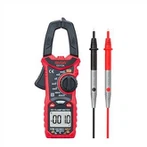
Learn to Find Faults with Multimeter
It is the most basic function of the multimeter to check short circuit, open circuit and leakage. Let's talk about it in detail below. How to check the multimeter
How to check whether the wire is short circuited with a multimeter
Wire short circuit: It means that the live wire and the neutral wire are connected together, so we call it a wire short circuit
The multimeter judges whether the live wire and the neutral wire are short-circuited. We need to use the buzzer of the multimeter. In the case of a power failure, first we put the red test lead on the live wire and the black test lead on the neutral wire. If there is a beep, it means it is on. Yes, if the live wire and the neutral wire are connected, it proves that the wire is short-circuited. If the multimeter does not respond, it proves that it is not connected. If the live wire and the neutral wire are not connected, it proves that the wire is not short-circuited.
Remarks: To check the short circuit with a multimeter, the power must be cut off first, and the live wire and neutral wire should be disconnected from the load
How to check whether the wire is broken with a multimeter
Wire break: It means that the wire is blocked, and there is a break point in the middle of the wire, which is also called an open circuit
The multimeter judges whether the wire is open or not. It also uses the beeping gear of the multimeter, and puts the red and black test leads on the two ends of the wire respectively. If there is a beep, it proves that it is connected.
Remarks: Use a multimeter to judge whether the wire is broken, and measure the breakpoint of the wire
The method of judging whether the wire is leaking with a multimeter
Wire leakage: refers to the connection between the live wire and the ground wire, or the connection between the neutral wire and the ground wire. We call it leakage current.
Leakage of household appliances: refers to the connection between the wires of household appliances and the metal shell of household appliances, we call it leakage of household appliances
The multimeter judges whether the wire is leaking. We also use the buzzer of the multimeter to measure the live wire, the ground wire, the neutral wire and the ground wire with red and black test leads. If there is a buzzing sound, it means that there is a leakage.
The multimeter judges whether the household appliance is leaking electricity. We also use the beeping gear of the multimeter, and put the red and black test leads on the wire of the household appliance and the metal shell of the appliance respectively. If the multimeter buzzes, it means that there is a leakage. Leakage
Remarks: When using a multimeter to measure the leakage, the power must be turned off first. For the faint leakage of the wire or the leakage of the household appliance, it is generally impossible to measure it with a multimeter. Use a megohmmeter to measure it
The method of measuring short circuit, open circuit and leakage with a multimeter is basically the same. They all use the beep file of the multimeter to judge whether there is a short circuit, open circuit or leakage by measuring the on-off method.