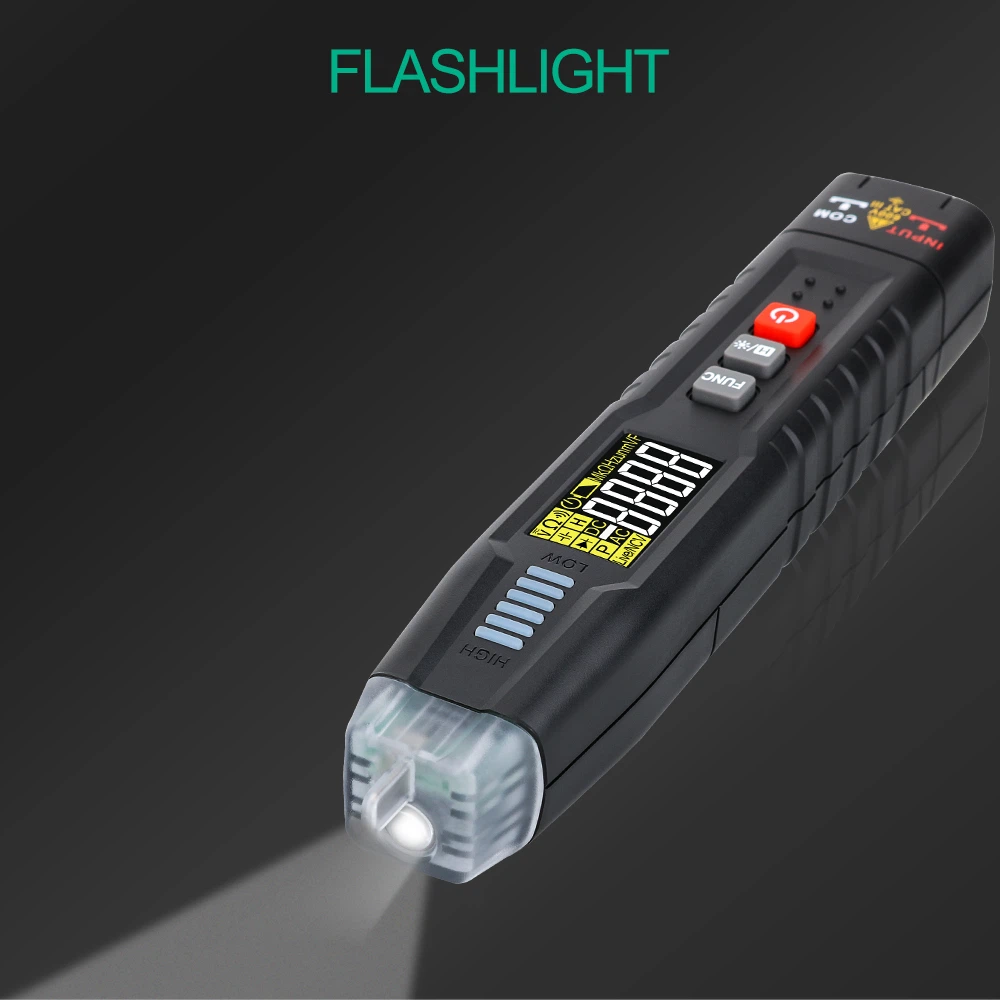
Low frequency measurement requires choosing a suitable multimeter
Most modern multimeters can measure AC signals with frequencies as low as 20Hz. But some applications require measuring lower frequency signals. To make such measurements, you need to choose a suitable multimeter and configure it appropriately. Consider these examples:
The Agilent 34410A and 34411A multimeters use digital sampling technology to make true RMS measurements down to 3Hz. It uses digital methods to increase the settling time to 2 or 5s with slow filters. For measurements, you should pay attention to:
1. Setting the correct AC filter is very important. The filter is used to smooth the output of the true-rms converter. At frequencies below 20Hz, the correct setting is LOW. When setting the LOW filter, ensure the stability of the multimeter by inserting delays of 2 and 5 seconds. Use the following command to set the low filter.
2. If you know the level of the signal being measured, you should set the manual range to help speed up the measurement. The longer settling time for each low-frequency measurement will significantly slow down autoranging.
3. 34401A uses a DC blocking capacitor to block the ACRMS converter to measure DC signals. This allows the range used by the multimeter to measure the AC component. When measuring sources with high output impedance, allow sufficient time for the DC blocking capacitor to stabilize. The settling time is not affected by the frequency of the AC signal, but is affected by any changes in the DC signal.
The Agilent 3458A has three methods of measuring ACRMS voltage; its simultaneous sampling mode can measure signals as low as 1Hz. To configure the multimeter for low-frequency measurements:
1. Select synchronous sampling mode:
2. When you use the synchronous sampling mode, for the ACV and ACDCV functions, the input signal is DC coupled. In the ACV function, the DC component is mathematically subtracted from the reading. This is an important consideration because the combined AC and DC voltage levels can create an overload condition even if the AC voltage itself is not overloaded.
3. Selecting the appropriate range can speed up the measurement, because when you measure low-frequency signals, the automatic range feature will cause delays.
4. In order to sample the waveform, the multimeter needs to determine the signal period. Use the ACBAND command to determine the pause value. If you do not use the ACBAND command, the multimeter may pause before the waveform repeats.
5. The synchronous sampling mode uses level-triggered synchronization signals. However, noise on the input signal may cause false level triggering and incorrect readings. It is important to choose a level that provides a reliable trigger source. For example, avoid the peaks of sine waves because the signal changes slowly and noise can easily cause false triggers.
6. To get the best readings, make sure your surrounding environment is electrically "quiet" and use shielded test leads. Enable level filtering, LFILTERON, to reduce sensitivity to noise.
Convert the rms voltage using an analog circuit with a DC blocking capacitor. It can measure signals as low as 3Hz. To achieve measurement results, select a low-frequency filter, use manual ranges, and verify that various DC offsets are stable. When you use a slow filter, you insert a delay of 7 seconds, which guarantees the stability of the multimeter.