Main specifications, display digits, and display characteristics of digital multimeters
The display digits of a digital multimeter are usually 3 1/2 to 8 1/2 digits. There are two principles for determining the display digits of a digital instrument: firstly, the digits that can display all numbers from 0-9 are integer digits; The second point is that the value of the fractional digit is based on the highest digit in the maximum displayed value as the numerator. When measured at full range, the value is 2000, indicating that the instrument has 3 integer digits. The numerator of the fractional digit is 1, and the denominator is 2, so it is called 3 1/2 digit, which is read as "three and a half digits". The highest digit can only display 0 or 1 (0 is usually not displayed). The highest digit of the 3 2/3 digit (pronounced as "3 and 2/3 digits") digital multimeter can only display numbers from 0 to 2, so the maximum displayed value is ± 2999. In the same situation, it has a 50% higher limit than a 3 1/2 digit digital multimeter, especially valuable for measuring 380V AC voltage.
Universal digital multimeters generally belong to handheld multimeters with 3 1/2 digit displays, while 4 1/2 and 5 1/2 digit (below 6 digits) digital multimeters are divided into handheld and desktop types. More than 6 1/2 digits are mostly desktop digital multimeters.
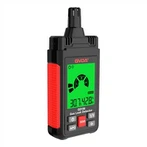
The digital multimeter adopts advanced digital display technology, with clear and intuitive display and accurate reading. It can ensure the objectivity of readings and conform to people's reading habits, which can shorten the reading or recording time. These advantages are not possessed by traditional analog (i.e. pointer) multimeters.
Accuracy (precision)
The accuracy of a digital multimeter is the combination of systematic and random errors in the measurement results. It represents the degree of consistency between the measured value and the true value, and also reflects the size of the measurement error. Generally speaking, the higher the accuracy, the smaller the measurement error, and vice versa.
The accuracy of a digital multimeter is much better than that of an analog pointer multimeter. The accuracy of a multimeter is an important indicator, which reflects the quality and process capability of the multimeter. A multimeter with poor accuracy is difficult to express the true value and can easily cause measurement errors.
Resolution (resolution)
The voltage value corresponding to the last digit of the lowest voltage range of a digital multimeter is called resolution, which reflects the sensitivity of the instrument. The resolution of digital instruments increases with the number of displayed digits. The maximum resolution index that can be achieved by a digital multimeter with different digits is different.
The resolution indicator of a digital multimeter can also be displayed using resolution. Resolution refers to the percentage of the minimum number (excluding zero) and maximum number that an instrument can display.