Maintenance method of switching power supply
1. dummy load method
When repairing the switching power supply, in order to distinguish whether the fault is in the load circuit or the power supply itself, it is often necessary to disconnect the main load and add a dummy load to the main voltage output end of the switching power supply for test run, as shown in Figure 4-1. The reason why the dummy load is connected is because the energy stored in the primary winding of the switching transformer is released to the secondary side during the cut-off period of the switching tube. If the dummy load is not connected, the energy stored in the switching transformer has nowhere to be released, which can easily lead to Tube breakdown damage. Regarding the dummy load, it should be selected according to the output voltage (or power) of the switching power supply. Generally speaking, if the output voltage is above 100V, a 40-100W light bulb or a high-power resistor of about 300Q should be selected as a dummy load; if If the output voltage is below 30V, you can choose a light bulb used on a car/motorcycle or a 600Ω~1kΩ high-power resistor as a dummy load.
Maintenance method of switching power supply_common fault maintenance of switching power supply
In addition, it should be noted that for some electronic products, the DC voltage output terminal of the switching power supply is grounded through a resistor, which is equivalent to connecting a dummy load. Therefore, for a switching power supply with this structure, it is not necessary to connect a dummy load during maintenance.
2. short circuit method
The parallel switching power supply generally adopts a direct sampling voltage stabilization control circuit with a photocoupler. When the output voltage is high, a short circuit method can be used to distinguish the fault range.
The process of the short-circuit repair method is: first short-circuit the two feet of the photosensitive receiving tube of the photocoupler, which is equivalent to reducing the internal resistance of the photosensitive receiving tube, and the measured main voltage still does not change, indicating that the fault is behind the photocoupler (switching transformer side of the primary circuit). On the contrary, the fault is in the circuit before the optocoupler.
It should be noted that the short-circuit method should be carried out in a targeted manner on the basis of familiarity with the circuit, and blind short-circuiting should not be allowed to avoid expanding the fault. In addition, from the safety point of view of maintenance, the load circuit should be disconnected before short circuit.
3. series bulb method
The so-called series bulb method is to remove the fuse (fuse) of the input circuit, and use a 60W/220V bulb in series at both ends of the fuse. When the AC power is connected, if the light bulb is very bright, it means that the circuit has a short circuit. Because the light bulb has a certain resistance value, such as a 60W/220V light bulb, its resistance value is about 500Ω (referring to thermal resistance), so it plays a certain role in limiting the current. In this way, on the one hand, the fault of the circuit can be roughly judged intuitively through the brightness of the bulb; on the other hand, due to the current limiting effect of the bulb, the components that have been short-circuited will not be burned immediately. After the short-circuit fault is eliminated, the brightness of the bulb will naturally dim, and finally the bulb is removed and the fuse is replaced.
4. Substitution method
The substitution method is divided into component-level substitution and board-level substitution.
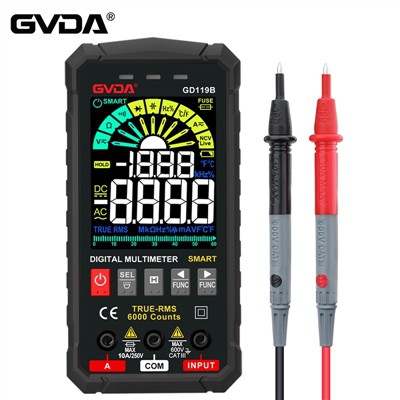
Component-level replacement refers to replacing suspected components with normal components. If the switching power supply works normally after the replacement, it means that the replaced components are damaged. In switching power supplies, some components can be directly judged by a multimeter whether they are normal, such as resistors; some components are not easy to judge, such as power control chips. Therefore, for components that are not easy to judge, if there is a problem suspected during maintenance, it is recommended to replace them with correct components to improve maintenance efficiency.
Board-level replacement refers to the overall replacement of the switching power supply of the whole machine or a part of the power supply circuit. This maintenance method is mainly used for maintenance when a large area of components is burned out in a switching power supply or when a difficult failure occurs in a switching power supply. The characteristics of this maintenance method are: thorough troubleshooting and high maintenance efficiency, but the cost is relatively high.
There are many ways to repair the power supply, such as oscilloscope method, heating and cooling method, manual intervention method, etc., which will not be introduced here.