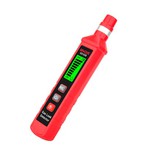
Maintenance Methods of pH Combined Electrode
1. When the composite electrode is not in use, it can be fully immersed in 3M potassium chloride solution. Do not soak in detergent or other absorbent reagents.
2. Before use, check the bubbles at the front end of the glass electrode. Under normal circumstances, the electrode should be transparent and free of cracks; The bubble should be filled with solution and there should be no bubbles present.
3. When measuring solutions with high concentrations, try to shorten the measurement time as much as possible, clean carefully after use, and prevent the measured liquid from adhering to the electrode and contaminating it.
4. After cleaning the electrode, do not use filter paper to wipe the glass film, but use filter paper to absorb dry to avoid damaging the glass film, preventing cross contamination, and affecting measurement accuracy. 5. During measurement, pay attention to the silver chloride internal reference electrode of the electrode, which should be immersed in the chloride buffer solution inside the bulb to avoid the phenomenon of digital jumping in the display part of the meter. When using, be careful to gently shake the electrode a few times.
5. Electrodes cannot be used for strong acids, strong bases, or other corrosive solutions.
6. It is strictly prohibited to use in dehydrated media such as anhydrous ethanol, potassium dichromate, etc.
What is the principle of pH meter
Ionic activity refers to the effective concentration of ions involved in electrochemical reactions in an electrolyte solution. There is a quantitative relationship between ion activity (α) and concentration (c), expressed as: α=γ c, where α is the activity of the ion; γ is the activity coefficient of ions; C is the concentration of ions.
Gamma is usually less than 1, and when the solution is infinitely dilute, the interaction between ions tends to zero. At this point, the activity coefficient tends to 1, and the activity is equal to the actual concentration of the solution. Generally, the concentration of H ions in aqueous solutions is very low, so the activity of H ions is basically equal to their concentration.
According to the Nernst equation, ion activity is directly proportional to electrode potential. Therefore, a relationship curve between electrode potential and activity can be established for a solution. By measuring the potential, the ion activity can be determined. Therefore, in reality, we calculate the concentration of H ions by measuring the potential.