Measurement and Calculation of Handheld Laser Rangefinders
Firstly, the measurement and calculation of laser rangefinder.
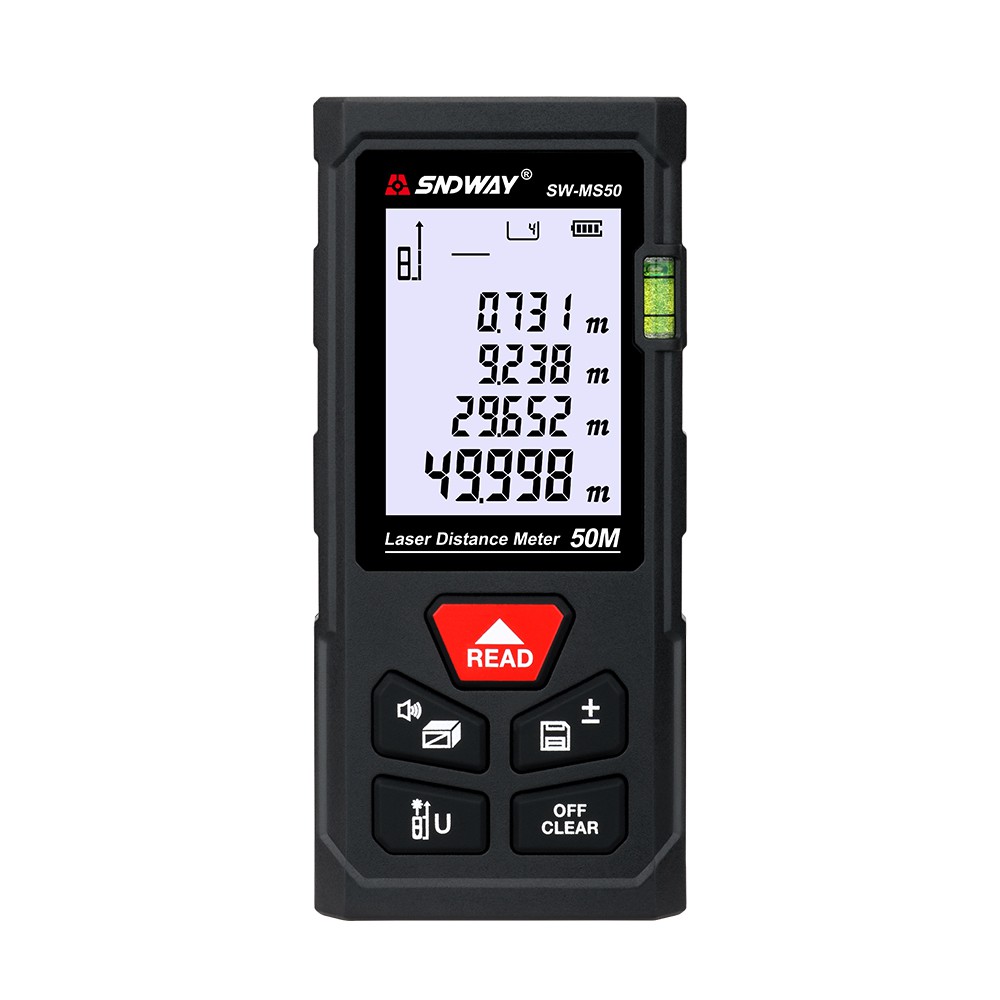
Handheld laser rangefinder is a semiconductor laser rangefinder that integrates optoelectronics and is characterized by natural surface reflection measurement, accurately measuring short distances in space. Currently widely used in fields such as construction, equipment, real estate, surveying and mapping. Steel ruler measurement is much superior, saving manpower and material resources, and improving operational power.
1. Verification requirements for handheld laser rangefinders.
According to the requirements of JJG966-2001 Verification Regulations for Handheld Laser Rangefinders, the instruments currently in use are roughly as follows:
(1) The impact of voltage changes on distance measurement;
(2) The commonality between the reflector and the measured value;
(3) The impact of temperature changes on distance measurement;
(4) Measurement repeatability;
(5) Increase the constant;
(6) Summary and judgment of distance measurement standard error.
Secondly, detection.
1. Measurement repeatability.
Choose the appropriate orientation to arrange the handheld laser rangefinder and reflector, measure continuously for 10 times according to the policy, and calculate the measurement repeatability.
2. Adding constants and their accuracy, as well as summarizing and judging policies.
Use a 20 meter indium steel ruler as the baseline for the inspection channel, arrange the instrument at one end of the baseline, and adjust the rangefinder to align with the reflector so that the measurement axis is parallel to the baseline axis. Then, measure the observation value (10 segments) by moving the reflector from near to far, and take the average of 5 readings per observation as the observation value.
At present, there are three commonly used time distance measurement methods in laser ranging: pure counting method, pseudo interpolation, and digital interpolation.
Pure counting circuits are simple and have a long measurement range, but their accuracy is low, so they are generally not selected separately; Imitating interpolation can improve counting accuracy to the PS level, but due to its capacitive charging and discharging technology, it has poor linearity, long measurement time, and is greatly affected by temperature and electromagnetic radiation interference, making it unsuitable for high real-time performance and harsh working environments of distance measurement sensor systems; The digital interpolation method is based on delay line insertion technology, with high single pulse measurement accuracy, large measurement plan, repeatable measurement, and is very suitable for laser ranging sensors.